Balancing Technology and Human Connection: A Conversation with Sparkle
BSTH Charley
===
[00:00:00]
Joshua McNary: Welcome to the BizTech Superhero, the podcast that empowers you to unleash the technology superpowers within your business. I'm your host, Joshua McNary.
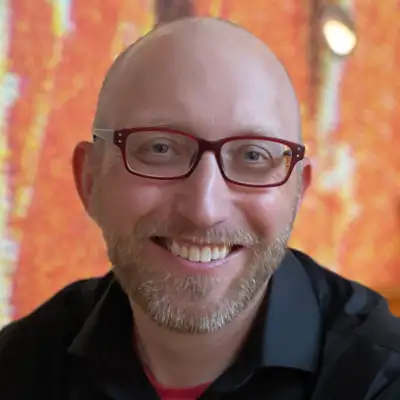
Joshua McNary: I'm joined by today's superhero, Charley Lapamardo, who performs as Sparkle, a speaker, singer, and facilitator based in San Diego, California, who is deeply focused on helping people connect with their own sense of possibility. Charley and I met at the Fractional Executive Conference in Minneapolis last fall, the same event where I met recent episode 20 guest, Corey Dunham.
Joshua McNary: As a group, we spent the first dinner of that event talking about our work, what it means to run an authentic business, how to maintain a positive mindset, and the importance of staying open, curious, and engaged with the people around us.
Joshua McNary: Charley's background spans employee experience research, community and cultural leadership, corporate team-building events, [00:01:00] and live performance. Having previously worked with Wayfair on employee experience and cultural initiatives, Charley today works independently as a facilitator and event host while also performing with multiple vocal groups, such as the San Diego Women's Chorus.
Joshua McNary: Charley brings together a unique mix of performance and human connection. Whether on stage, emceeing events, working on performance coaching, Charley's work centers around creating environments where people feel energized and ready to move forward. Today, we will talk about communication, human connection, and why creating meaningful experiences matters more than ever in our busy technological age.
Joshua McNary: Along the way, we'll weave in how Charley uses technology to empower connection. Sparkle, welcome to the show.
Speaker: Hi, Josh. I'm so excited to be with you
Joshua McNary: So for folks just meeting you here for the first time, could you share a little bit more about who you are and what you do?
Speaker: [00:02:00] Hello, my name is Charley. You can call me Sparkle. I love being on stage. I have designed my whole career, I have designed my company around spending as much time as possible on stage, because I have been doing that my whole life. I strayed from it when I did my stint in corporate America, which was highly educational.
Speaker: It's helped me understand audiences that I could have never understood from the outside. But I am so pleased to bear witness from the Wild West, literally in California, from the Wild West of entrepreneurship, and what it looks like to create something for myself, to work toward liberation, to be strong in community, to create an e- an economy of bartering and trading on friendship rather than using one another, which I consider [00:03:00] like the matriarchal model of business.
Speaker: How can we all benefit together, and how can we do that by gathering in community? So that's a little bit of what I'm about. I grew up in Massachusetts, and I moved to California three years ago before starting my business. Yeah I'm just bringing this really cool, wild perspective of what it looks like to live life differently.
Speaker: And then I'm bearing witness to that on stage, and bringing people into my world, into the containers that I design and host to help them facilitate their transformation, whatever that might be at the moment, by bearing witness to my experience
Joshua McNary: That's great. And of course, as people are guessing from your brief introduction there, that you come with a lot of energy and for people. You give people energy through the way you communicate and such, so I appreciate that. That was very evident early on in meeting you, and you were on stage at the event that I [00:04:00] was at where I met you, and then we got to spend some time together through that dinner I mentioned and other activities at the event.
Joshua McNary: I appreciate that, and I'm happy to be able to help share that with those that are listening as well through this podcast. So with that said, tell us a little bit more about what that actually means in your work. What kind of things do you actually do? I met you as a facilitator, as an emcee initially, but I know you do some other things.
Joshua McNary: So share a little bit about what that actually looks like when it's actualized for people that might, be interested in what kind of things you do.
Speaker: That's a great question because Especially when I say I'm a performer, people say, "Okay, but what do you perform?" So I get that. It's it's- it's a broad thing. So I think of it as what I do on stage versus what I do backstage. So I do all of this work in the background working with event organizers.
Speaker: Usually I... Like- like part of... My bread and butter working model is working with team [00:05:00] building companies who do the business development, who plan the events, and then I get a brief, I show up on site, and give the client the best experience possible given their goals. I design the script. I design the run of show.
Speaker: I am the one who welcomes the group, who does crowd control, who, I- I love... My favorite sessions are when I get to dive really deep. Those are what I consider... if it's hosting and announcing what's gonna happen and keeping time and entertaining the crowd, that's what I consider to be my MC-ing work.
Speaker: My facilitation is when I get to run activities and do debriefs to abstract and apply what we learned in our time together. One of the places I work is the UCSD Challenge Course, so I am i- in a harness attached to ropes, attached to cables 40 feet in the air, [00:06:00] which I never thought that I would do, but it has made me such a good facilitator because I've learned how to help people work through highly intense emotions and how to trust myself.
Speaker: So all of that. Sometimes my work is in costumes, sometimes my work is literally in the dirt, but my front stage work is welcoming people, guiding them through an experience, telling them a story, helping them uncover things within themselves, within a group so that they can facilitate their transformation as a group, whatever that might be.
Speaker: I do backstage work too. So the part of the backstage work that I'm most passionate about is coaching. So this kind of happened organically where there were people I met, they saw me on stage, they said, "Oh my God, I love your energy. How do I get some of that?" And I said you have it. You...
Speaker: let's work together and I can guide you through that." And so it's become more [00:07:00] than vocal coaching. I started out doing, some vocal technique and I'm highly skilled and trained in vocal production and vocal technique, but that's not my superhero power. My power is the heart stuff underneath that.
Speaker: I've been through the junk Of losing touch with myself. Sitting behind a desk all day, in meetings all day, not having that rush of actually telling a story and actually performing. So I love doing coaching. I love bringing out that confidence and power in people and helping them feel their best on stage so that they can share the ideas that matter to them.
Speaker: 'Cause I've noticed that a lot of speakers have something important to say, and the technical components of what they're doing and their mental blocks are blocking the audience from receiving that meaningfully. So I love that work, and I do a bunch of logistics stuff. I'm [00:08:00] very good at operating events, and I, that's something that I've started to phase out, 'cause that's one, that's an example of I can do that thing.
Speaker: That's not really the thing that I wanna do. And for a while I had to. I had to pay my dues 'cause I wanted to understand how the whole system works. But luckily I find myself more and more on the side of, oh, somebody else can do that.
Joshua McNary: So your business is Sparkle Works, and I wanna talk a little bit at some point during the conversation about what you're doing with your technology in your own business here. But before we get to that, I want to touch on this idea that you're getting to around finding your superpower. You used that term earlier.
Joshua McNary: We're on the BizTech Superhero, right? But we're talking about the idea of what are... Where's our energy, where's our... What should we be doing? And I think we're all on a journey. I know I've identified, like you have, what has or what hasn't been working in the past, and I think we continually do that through life.
Joshua McNary: So [00:09:00] with regards to business and what you're doing with your business, can you maybe talk a little bit about some of the common themes maybe you've seen in business owners or in people in professional lives or careers, and touch on that a little bit deeper than what you've already have, and then maybe we can loop that back to how that actually applies in your work?
Speaker: Yeah. Because the core of building my business has been building my network. And so part- so many of the ways that I've navigated experiences and challenges in entrepreneurship has come from what I've learned from others who I've made meaningful connections with. So I've seen a lot of commonalities.
Speaker: I'll pick some out. I think the first is this idea of doubt and fear and figuring it out as we go, that for so long I was focused on doing it the right way, of doing it the efficient way. [00:10:00] So not, why would I do all this work? Why would I invest all in this thing and then figure out it's something else that I wanted to do?
Speaker: And that's my block, and I've talked to so many entrepreneurs about that. And everyone is making it up as they go, because the nature of an evolving, live, dynamic business is that it's constantly changing. So even in those moments where I've gotten a firm strategic footing that's been a good plan for the time it was a good plan. And then it was like, "Oh, okay. I guess I, I gotta do something different here." And so I always... I come with this, beginner's mindset to various folks I meet and ask them about that, and they say, "Yeah, I've gone through that, too." And I think it's part of the natural growth process and the exploration process.
Speaker: I used to be a user researcher, kinda still am, and a lot of that was discovery. How can I discover what the customer needs? How can I discover the problems to [00:11:00] be solved? How can I integrate the problems that I have already solved into an offer that is valuable to others? And that, that has been such a challenging question that I've been delighted to discover is not just my challenge.
Speaker: I think most people who start a business go through that. It's interesting the dynamic there with VCs. So I have organically developed this business, so it has been slow growth over time. The contrast to that is like growth hormones and venture-funded businesses, and they, that, the idea is that those grow like a weed overnight.
Speaker: And I think that those founders especially because there are, frequently they've held other businesses, I think there's less of that period of exploration. They know specifically what they're gonna do because they've gotten it funded. They have a timeline, they have a runway, all that kind of stuff. But the business owners that I've met like me who are growing [00:12:00] organically are constantly wading through this messy middle of development and iteration.
Speaker: So the that's one challenge. I would tie that to what we call imposter syndrome, which I don't actually believe in, which is that I don't belong in this place, or I'm not ready, or I'm not good enough. And I've started to think of that as gathering evidence. I literally on my wall have the year mapped out and a sticky note for every event that I'm doing so that I can see what's coming up, so that I can look back on what I've done successfully.
Speaker: And so I look at that evidence, and when I wanna discount myself, when I wanna not apply, when I am hesitating to reach out, when I'm putting off shipping the thing, whatever, I can look at the evidence and say, "Okay. Yeah, but I've done all this," right? So even if I'm not as good as I will [00:13:00] be one day, I've never been as good as I am today.
Joshua McNary: That's right.
Speaker: So those are a few things that I've noticed a lot of people really struggle with, me included.
Joshua McNary: Yeah, I think many that are listening to this could resonate with those themes, and maybe we've heard those themes in other venues, right? But those are some truths that are universal when you're in this kind of work. And, even for the for the startup founders of the VC-backed companies and such, there's this element of trying to figure out your own why and your own direction, right?
Joshua McNary: For whether you're a small business owner or entrepreneur or in a corporate environment or, that startup environment we're all guiding along. Sometimes we're pushed along into one of those areas, and then we find ourselves maybe not where exactly we wanna be. I know my own journey, I've spoken to it previously, has been different types of businesses within the business I've run for the last 12 years as that continues.
Joshua McNary: And then since [00:14:00] we're on the Biz Tech Superhero as well, technology has a way of doing that as well, pushing us around in addition to maybe our own social pressures or our own heads. The technology can do that. Today here in 2026 as we're recording this of course, artificial intelligence has been all the rage the last number of years, and people are thinking about how that might push us in good or bad directions.
Joshua McNary: Or for that matter, we think of more traditional technologies of the last decade and the way the tools maybe are designed to help us in many cases, or in some cases harm us, even if they're not intending to harm us, they can harm us. So maybe we could talk about that a little bit, like this idea of being pushed around and whether that be by our own brains or social pressure or the technology.
Speaker: I think pushed around is what happens when we act without intention. So it is so easy to get distracted by the cool thing that this tool can do. I saw this all the time in user research. Literally [00:15:00] months-long project because somebody attended a sales call and said, "This is the best tool ever, and we have to build a business case around it."
Speaker: So I was like, the conclusion of the book was written. They had already decided they wanted to invest in that, and I had to be the bearer of bad news and say, "There are systemic issues here that, if unaddressed, will be exacerbated by the introduction of this tool." And so we as individual entrepreneurs, it's so easy to get pushed around if you don't know what you're driving toward.
Speaker: And I'm feeling this recently because my why is somewhat timeless. Like my why the world that I envision is a world where all beings may be free to sparkle. That is what was frankly divinely seeded in me. It came from something else, and has t- really taken root in my soul. At the, at t- at the [00:16:00] tail end of my corporate career, I did an event.
Speaker: I was on stage and looked around and said, "Oh my God. This is what I need to be doing." And I had no idea what the path would look like from there to here, and of course I'm not finished, but that why is what has driven me to do what I'm doing, which means that when I start to get distracted trying to do other new shiny things, I can come back and return to myself and say, "What does success look like?
Speaker: Like, why would I do that?" Something recently that I've been grappling with in regard to my why and technology is, as you said, artificial intelligence. Because I see the business use case for having a full team of bots and agents who are specifically trained on my work. Hiring a team is [00:17:00] expensive.
Speaker: There are all these tasks that I have forced myself to do that I don't wanna force myself to do. The business case is so strong, and my goal is to create a world where all beings may be happy and free. And I have seen mounting evidence of the negative cost to human beings for our use of AI at scale.
Speaker: Like yesterday I was reading about these, the illnesses of people living within 20, I think it's 20 miles of data centers, because the data centers are giving off this frequency that is below the range of human hearing, but affects our bodies physiologically. There's that. There's the warming, there's the water, and so all of those things, if I look at a world where all beings may be happy and free, that's not [00:18:00] happy and free.
Speaker: So it's a question of do the ends justify the means? Do I use... I keep having this thought in my head like, humans will kill ourselves over having to not Google for five seconds longer. That the ways, it's, it, that the ways that we're using it are so elementary, too. It's like we're using this precision diamond cutter to s- saw a tree.
Speaker: It's like we're applying so much power to the smallest tasks. And so I see the benefit of the system, and I come back to my whys. Will using those technologies serve my mission more than detract from it? And what are the ripples in positive and net negative ways? The positive ripples are I'm on stage, I share my joy.
Speaker: Other people can absorb that if they don't have quite enough at [00:19:00] the moment. I can help that build in them, right? That's, those are some of the ripples. Sharing my ideas. Those are the good ripples. And then there's the unintended negative ripples of, oh, wow, what do, what is the cost of supporting that level of productivity?
Speaker: And wouldn't I be better to bring other humans in the fold, not because of what they can do for me, but because a human movement requires human community. So if I were to replace everybody with an agent, I would do, be doing this work on my own. And for the work that I do, for the reasons that I do it on my own, man, has it slowed me down to work alone
Joshua McNary: Okay, there's a lot there we can get into, and we could do a whole podcast episode just on, any one of the threads there in that conversation. I'm going to pull on the thread around the idea that you alluded to earlier, which is Being efficient. [00:20:00] And technology is a thing that we often use to find efficiencies, and right now it's, AI is the is what people are talking about.
Joshua McNary: But there's been other tools in the past that have come and gone or maybe had concerns or created concerns that we didn't see at the time, and in the context of what you were talking about. But ultimately, this idea of how do we make sure we're grounded to the why and to what's important and to human connection, which I think is something...
Joshua McNary: I'm gonna pull on that thread just slightly here as well, saying that there's an element of what artificial intelligence could do, to be determined, that could actually enable more human connection. Notwithstanding many of the other themes that you were talking about, which I'm not gonna pull on.
Joshua McNary: But the idea that, if it-- w- the best version of it could actually empower human connection, while also thinking about this efficiency element of like we don't want to cut people out of what we're doing and make sure that human part is part of what we're doing with [00:21:00] any technological tool we're using in the future.
Joshua McNary: It's getting a little bit highfalutin, and again, we probably could talk about that little ~phra-phrase~ I just said for the next half an hour. But maybe just touch on that and maybe bring it back down to the idea of, in our day-to-day business, where we are now, you and I and those that are listening, how we maybe frame what we should or shouldn't be trying.
Speaker: I'm gonna start with a concrete example, communications. So one of the first things that I thought when I started seeing emails crafted by ChatGPT was, this is making visible communication structures that are indoctrinated to us from whatever age. I remember the learning curve of coming into professional communication, learning about the shorthand that we use, learning about the structures that we use, all for the sake of efficiency.
Speaker: It's the same reason that we use [00:22:00] acronyms. It's because we all have a shared understanding of what that is, so we don't have to use a ton of words to get to that. We use communication structures in the same way. When an email is structured in a way that we're familiar with, our brain can scan it and retain the information rather than trying to decipher the format.
Speaker: This is highly visible to me because I am neurodivergent. I think for a lot of people who are neurotypical, that structure comes really intuitively, and they can read between the lines in ways that frequently confuse me, people saying things like, "Best," the sign-off best, which means nothing, right?
Speaker: And it confounded me. I was like, "Why does everyone sign their emails best?" And it's just because that's what people do. That's how you know the email's over, and they don't wanna think of something more fancy than that. So artificial [00:23:00] intelligence, in whatever form it is, in whatever application we're accessing it, it uses these structures to standardize information, and so there's something useful about that because it streamlines our human communication.
Speaker: Now, human communication does not need to be efficient always. There is a time and place for that. However, there is a time and place to be human to human. There is a time and place for spelling errors or grammar errors or clunky sentences, and I think today there's this warm, bespoke quality to an email that's a little bit of a mess.
Speaker: You're like, "No way. Dude, an AI wrote that?" And I'm a very... i'm a well-spoken person. I'm articulate. I'm good at writing, but emails are an art unto themselves. And so I think using some... I understand the desire to [00:24:00] use AI for something like that. However, that human touch is important.
Speaker: It is important to spend our precious, limited time being intentional- in the way that we communicate to other people. Otherwise, if we used AI for every communication ever, that's just robots talking to each other, and this idea that technology helps humans connect becomes false if it's only robots talking to each other.
Speaker: The idea is for me, that it's helpful to create that scaffolding so that a human can scan it, but then my human details are going into it. When I'm writing a script, I am rarely, if ever, writing anything with AI. Sometimes I will use Claude as a thought partner on, "Okay, this is something that I wanna give a talk about.
Speaker: Can you help me explore [00:25:00] this idea?" And having a matter of collaboration because I think that's part of the way to think about it. Right now, we're using generative AI specifically in an exploitative, capitalist way. We're thinking of it as another resource we can use at all costs, and I think the other way to think about it is this is an I'm gonna say inevitable.
Speaker: This is an inevitable evolution toward a sentient race of beings on Earth. That is, that, that's the train that we've started. And human supremacy, the way that we act on this planet, is that we are the best species out of all the species, and if we treat AI with the human supremacy we have treated other animals, we will not survive.
Speaker: So
Joshua McNary: That's a big one. That's a big topic. And of course, there's a lot of thinking [00:26:00] around that. Y- and again, that's important. We need to be thinking about that. I don't wanna cut you off from a standpoint of what we have the time to talk about today. I think, it's a big topic.
Speaker: And I wanna hear your thoughts, so yeah you lead us
Joshua McNary: But I agree that, th- those topics do come up when we start thinking about the macro of the micro, we're talking about the micro primarily in this show, but the macro starts to come up. And in the AI meetup I, I host here locally in my area and such, these things always bubble up because we all should, as humans, see the potentials of what could happen here, good and bad.
Joshua McNary: And I appreci- I do appreciate that. I'm gonna bring it back to that idea of the spelling being wrong. So of course, I use different tools to help me edit my text or help me generate ideas, as you were talking about, or generate phrases and such. But while I always disclose when I'm using, which is pretty much all the time now, but I'm-- whenever I'm using some kind of artificial intelligence in my, say, [00:27:00] my newsletter and such, but I'm also editing it as a human.
Joshua McNary: So yes, there will be the time that the spacing is wrong or the subject line is wrong. In fact, I had a client email I sent this week, and I, the word options was in the subject, and I totally, I f- replaced the P with a T or something. It was, like, totally wrong, and I got the reply from them like, "Oh, I'm sorry, I didn't realize I typed that wrong."
Joshua McNary: But it, it does show that humanity that I, even though I'm using the tools to help me, I'm still a human and modifying it to my needs, and sometimes that's ten percent, sometimes that's fifty percent, sometimes that's seventy-five percent of it that's being edited. But ultimately, that idea of how we're integrating with it, that how far are we holding the technology out at our hand's length, I think is an important component of what we're talking about here in this last few minutes.
Joshua McNary: Because there's been this theme in our lives, our entire lives, living in a technological age, where maybe it's a bit easier to hold the technology out farther. But [00:28:00] as we have this stuff become more and more important in our lives and more and more capable, it starts to intrude on us a little bit, and then we have to kinda push back a little bit to remain human in that sense.
Joshua McNary: And then ultimately, back to the beginning part of our conversation, allow us to stay true to our why's and true to ourselves and what we're trying to do in our business and our work. So I, I think maybe that's a way of kinda bringing it back to, what we're doing, what we can do in our sphere of influence necessarily today, listening to this podcast and maybe is a good way to kinda, to help us think about what the next best action is in our work.
Speaker: Many things come to mind. I will zero in on the idea of boundaries and detachment. So boundaries help us protect what is precious. Many of us are walking around and interacting with humans with [00:29:00] awful boundaries, and that extends to our use of technology. And when we have a dysfunctional r- relationship with boundaries, when we have a dysfunctional form of attachment to a generative AI tool that functions as a human confidant, things get really messy.
Speaker: And so I think it's the intention of the why, like why am I using this? Is this serving my goal? Looking at the macro of what is the world that I wanna see, and is this part of it? What role does this play, if any? But then also what is this not for? So it's as much about what it's not for as it is what it is for.
Speaker: And so for me, the boundary is I am never going to send anything that a, that an AI has generated without reviewing it. That's just a hard boundary for [00:30:00] me. But I know other people, based on their emails, who copy and paste without reading it through. And so that's my personal guideline for myself, is saying, it is precious to me that what is published under my name is truly representative of me and has the spirit of me within it, rather than letting the robot talk for me.
Speaker: I also don't use generative AI for therapy. I think that's really, that's... It's important to me that be a human, because humans can surprise me. And it's not that, it's not that those systems can't surprise me, but it's that human interact- when I interact with another human, I am experiencing myself from another perspective.
Speaker: I am consciousness experiencing itself. And so if I remove the human from that, [00:31:00] I'm not actually interfacing the way that humans are built to. Physiologically, we are built to be social beings. And so that's another... So I think the boundaries for me are different than the boundaries from other people, but that's the question, is what is precious to you?
Speaker: What is worth protecting? And what are you giving up when you allow technology to invade parts of your life that you didn't invite it? And is that for the best, or would you like to make a different decision?
Joshua McNary: I feel like part of what we've been doing here today is speaking... we can almost start a practice for people to come as like a technology psychologist or something. Like helping people think about how that technology's actually being applied in our life and our work, right?
Joshua McNary: We see it in both contexts. And with the limited time we have left, I think we probably [00:32:00] need to stop it there, but boy we could go on for a long time
Speaker: I know, it's so juicy.
Joshua McNary: Yeah, it is. Absolutely. So let me ask this question. What is working for you in your business and your work in Sparkle Works right now from a technological perspective?
Speaker: It's all designed around my neurodivergence. I, my task systems are designed to keep me on track bit by bit. But I tell you, there's a lot of space for human error in those systems. So I think for me, a lot of what's been helpful is externalizing my brain getting these things out of the juices of my day-to-day and just in one place so that I can free up my cognitive space to focus on other things.
Speaker: I love using tools like Airtable for longitudinal data gathering. I have a feedback survey that I send at the end, so I have [00:33:00] all my testimonials in there. I love a pivot table. I love looking at finances on a spreadsheet. I've recently migrated to QuickBooks. That's been something that was not...
Speaker: I didn't need to be doing that on my own manually. That's a case for technology. My systems are also largely social, that I have these communities that I belong to where I am regularly checking in with folks, and we're frequently using video technology to do that. But the system is...
Speaker: The people are integral to it. They are helping me keep on track. They are helping with the heart part of my business. And so I'm using... my philosophy as far as technological systems go is I love the shiny things. I'm a nerd. I love seeing how things work. And if I overcomplicate it, I will not use the system.
Speaker: So that's the principle I'm trying to operate by now, is how simple and [00:34:00] effective can this be?
Joshua McNary: I think we're all in that boat of making sure we're using tools that help us actually get the things done, and I think that does also relate to a lot of what we talked about in the small and big thoughts that we had through the conversation today. The idea of making sure that we're doing the right things for what we want, what we wanna do in our business, and the technology and tools that we're using are aligning with that.
Joshua McNary: So as we're coming down to the end of our time, I do have a question I ask all the guests on the show, and I'm going to ask that of you now. What is one actionable tip that you would give businesses looking to better leverage technology?
Speaker: The goal and the why. What system what goals and motivations is this system serving in your real life, world, and business? Design around the goals, the world [00:35:00] that you want to create. Solve problems from that angle. Design systems from that angle so that you are acting with intention, because then you have a system, not just a bunch of accounts that you keep getting emails for that you ignore
Joshua McNary: I love that. Intentionality is something that is a regular theme on this show and in other venues that I've been part of and certainly part of my strategic technology work. So I appreciate that and definitely connects to what we've talked about today
Speaker: It was so good to talk to you, Josh. This was awesome. This is... I didn't know what I was gonna talk about today not for lack of preparedness, but for the desire to be spontaneous here with you. So it's really cool. I talk a lot about performance and authenticity and art and community and joy, and it's really cool for me to examine those beliefs from this perspective.
Speaker: So thanks.
Joshua McNary: [00:36:00] I agree. This has been great. Where can people find out more about you online?
Speaker: My website is oursparkleworks.com and my Instagram is sparklyCharley. That is the behind the scenes, how the sausage is made, me me talking to you one on one, giving you a little window into my life
Joshua McNary: Perfect. Thanks for joining me today
Speaker: Thanks, Josh. It was a joy to be here
Joshua McNary: all right, folks. That's it for today. Be sure to subscribe to this podcast on any of the popular directories, tell a friend about what you have learned here on Biz Tech Superhero, and subscribe to my newsletter at mcnarymarketing.com/subscribe. Thanks for listening. I'm Joshua McNary, and I hope you will join me again next time so you can learn how to become a Biz Tech superhero.
Joshua McNary: Bye now.