Leadership Clarity in a Tech-Driven World with Cory Dunham
[00:00:00]
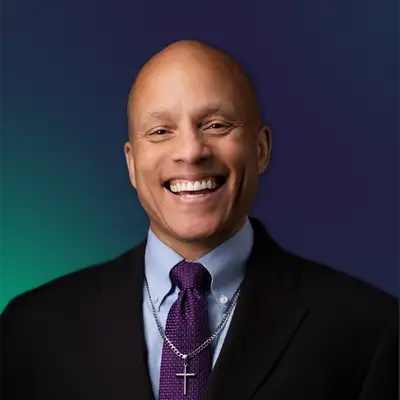
Joshua McNary: Welcome to the BizTech Superhero, the podcast that empowers you to unleash the technology superpowers within your business. I'm your host, Joshua McNairy. joined by today's superhero, Corey Dunham, executive coach and keynote speaker at his firm, Corey Dunham Advisory, based in Ann Arbor, Michigan.
Joshua McNary: Corey and I met at a fractional executive conference in Minneapolis last fall, and we quickly found a lot of shared ground around serving businesses well, keeping a positive mindset, engaging with others while remaining open and curious, and even a shared faith background. Corey works as a strategist, an advisor, helping founder-led service businesses close the gap between the value they deliver and the growth they experience.
Joshua McNary: Drawing on more than 30 years of operating inside founder-led businesses himself, he works with owners who are doing strong work, but often struggle with a familiar challenge. The market doesn't fully see the value they bring. [00:01:00] Today, Corey and I will talk about why so many good businesses stay under recognized, how founders can create more visibility without becoming someone they're not, and what it takes to build intentional, not accidental growth.
Joshua McNary: Plus, we, of course, will talk about how technology fits into leadership in today's modern business. Corey, welcome to the show.
Cory Dunham: Thank you, Joshua. I appreciate it.
Joshua McNary: So for folks just meeting you for the first time, could you share a little bit more about who you are and what you do?
Cory Dunham: Yes. I just quick background. I'm born in Chicago, Illinois, but as a baby, moved over to Michigan. So I pretty much only have known Michigan. I'm currently married 26 years with three kids who are all in college and all live at home. And we never see each other, which is so weird. But the great kids, and I have grown up or cut my teeth in business through my dad [00:02:00] starting our family marketing business back in 1980.
Cory Dunham: And so it's 46 years at the time of this recording. And I started in 86 when I was just getting out of high school. So it's been 40 years, which does not seem like it. So time goes extremely fast. And through that whole time, growing up in our family marketing business, I started off at the bottom, cleaning toilets, doing errands all the way up to leadership, management, and then co-owning it with my dad today.
Cory Dunham: And the most interesting part is that just all the transformations and transitions through that 40-year time period that he started the business approximately a decade or more than a decade before the internet became public. And I'm like, "What does that look like? " And my kids sometimes joke around that, "Wow, dad, were dinosaurs walking around at that time?"
Cory Dunham: And I'm like, "No, but you could still see the bones laying around."
Joshua McNary: That's right.
Cory Dunham: But just transitioning from a traditional marketing and graphic design agency to now the [00:03:00] internet, which is, okay, what the heck is this beast? What's this thing? And then realizing back in the day, we didn't do any work until we had, which we still mostly do as handshake deals, our 99% of our deals, because that's how we started with trust and relationship.
Cory Dunham: And then it got into the internet with people outside of Michigan and not really having that trust and relationship. We had some broken commitments there, so we started doing more contracts and things. But having the same framework of just developing trust and relationship has always been the thing instead of, "How can we get more business like I feel a lot of people do?
Cory Dunham: How can we get more business?" Just spray what do you call it? Pray and spray, just all kinds of content that re- isn't really aligned with anyone, which then doesn't really hit anybody's feelers or when they're listening to your message, doesn't really resonate with them. And really developing that call to action of, okay, who are we focused on?
Cory Dunham: What's most important? What problems are we trying to solve [00:04:00] and moving forward? And we've dealt with a lot of these transitions and then helped our clients to do the same thing. And because before the internet, we've worked with so many different people, handshakes. It was just, "Hey, Corey, your company is great.
Cory Dunham: You offer great value. I would recommend you to somebody else who's looking at marketing." And that's ... So we've dealt with a lot of different industries is what I'm trying to say. And one of the other areas is that as we move forward, I have developed some coaching, keynote speaking, some advisory services around leadership clarification, messaging, and then con- a consistent business process so you can keep that revenue flow right where you want it.
Cory Dunham: And I use a lot of aviation acronyms and metaphors because I have a private pilot license. I've been a pilot for over 30 years, and I use that to, when you are getting an airplane, you typically hit the GPS in most cases. And if your airplane is not course correcting throughout that multiple different times, you're [00:05:00] never gonna land to hit the destination when you wanna hit it and in the right spot.
Cory Dunham: And I feel that's the same way for most businesses that they get off track in alignment and they're off course and sometimes that's too far, bad things happen, or you can't get to where your destination. So yeah, that's pretty much my background and I'm more excited today in the last three to five years than I have been probably in the previous 25 years.
Joshua McNary: There's a lot of opportunity out there, and as the listeners can realize, just hearing you give your introduction there, that you have a lot of interesting ideas, a lot of good experience, and I don't think you should undersell your coaching and speaking, because I know you've been doing that.
Joshua McNary: That's how we met, essentially, through that capacity. And you've been doing that for those last three to five years really finding ways to level up what you've taken from those years of experience in marketing and technology and all those things you were alluding to and applying that to businesses, which I know in my practice is often what I'm doing too, is trying to bring that strategic layer to technology, and you're [00:06:00] doing that from the capacity of the marketing and the general business sense.
Joshua McNary: And that's part of why we're talking today, because we have some shared values there.
Cory Dunham: Yeah. And the, and one thing I did forget to mention is just some of the values of me, of or characteristics about me that I've typically been an introvert most of my life, and I've leaned into those skillsets that I've developed but through the 30, 40 years being in business, I've had to lean in.
Cory Dunham: And through my conversations with God, really allowing him to work through me and telling me, "Hey, Corey, you have a huge bigger gift on the extroverted side in the speaking area." And that's actually one thing a huge differentiator that's gonna be for anybody out there, especially with AI getting so good out there, but just having that human one-to-one connection and a level or two deeper people learning about who you are as a business leader, who you are as a business owner.
Joshua McNary: Absolutely. Yeah. The human component is definitely something that comes up on this show, even though we talk about technology here, because it's often the technology being applied by the human. [00:07:00] That's what's gonna determine its success or not within the technology. And that's certainly true of artificial intelligence in our current day and age.
Joshua McNary: And and as that only becomes more prominent going forward these kind of conversations, actually talking to people, we're doing this digitally via Zoom, but we are still talking and having a real relationship and we know each other, we met each other in person, that's gonna be, continue to be the highest value thing as humans as we look to the future.
Joshua McNary: But yes, absolutely the shared ... We also have the shared values of our similar Christian background and denomination and all that. So there's other things too that we have connection, which is fun in addition to our business and technology interests. So to maybe tell me a little bit about how you are viewing technology here.
Joshua McNary: We're recording this here in 2026 spring of 2026 with your clients, with your own work with your marketing firm and all these things, just give me your sense of where we're at with technology and how you and yours are using technology, day-to-day at this point.
Cory Dunham: Yeah, for me it's funny when I was just looking at all the the tech that we use, I'm [00:08:00] like, "I only feel like I use two or three different things." And come to find out when I looked at it, I'm like, "Oh my gosh, I use potentially 12 different pieces of tech." Somehow, whether that starts from a website or email all the way up to marketing systems and podcast site that I do and LinkedIn and all these other ones, but not even realizing how many I use, let alone, I find out the same thing in many other companies and organizations, and most are founder-led, because most businesses are small businesses.
Cory Dunham: And the challenge I'm seeing, one of the biggest things is and just a thing that hits me off the top of my just thinking is that too many people ... Tech is becoming so much easier, and much of it is either free or very low costing on a monthly service basis that people are jumping the gun. So it's a shiny object or a distraction challenge.
Cory Dunham: And therefore, I personally believe, yes, you could use ChatGPT, Claude, Gemini, all these [00:09:00] different ones for different characteristics and strengths that they have. However, most people are not even using anywhere near the full capacity of any particular app, whether that's LinkedIn, whether that's your your website, no matter what it is, your podcast, whatever it is, they're not using enough.
Cory Dunham: So I think we're getting distracted most people, and we're sitting in this range, if you wanna do it on a grading level, like on a C+ operating level, and it's, we're spending most of our time in apps learning them, and just clo- slogging along rather than being maybe closer toward an expert or in mastery when it comes to just a few tech applications.
Joshua McNary: Yes, there's absolutely a, like a FOMO fear of missing out element to what we do here. And that's only been accelerating with the artificial intelligence tools over the last few years, because they're literally changing daily, weekly, monthly, those kind of speeds, or maybe five, 10 [00:10:00] years ago, certainly technology has continued to expand.
Joshua McNary: That's been part of my pitch for many years is, there's so many tools, let me help you solve for that. But now it's like it was, it might have been a couple new tools a quarter, you might come across your desk. Now it's like almost every day, honestly, you're seeing something new within these AI models or within these AI tools that is, and you don't wanna get left behind, right?
Joshua McNary: You don't wanna be, feel like you're getting beat out by your competitors and such. And there's a lot of that language going on around right now, and that creates that C+ average as you were denoting, because you're, people aren't actually digging in and it's easy to do.
Cory Dunham: Yes. Yeah, and that's a huge thing with people, like you said, FOMO, fear of missing out, or a scarcity mindset that I, I don't ... And a lot of this I deal with leaders too the attitude and their mindsets, but the scarcity mind says, "Wow, I don't have enough at this moment to take action and move forward intelligently."
Cory Dunham: And then the other [00:11:00] side of that is also a blessing in this day and age, like you were saying, with technology changing so quickly in the number of apps, we are in now a truly creative and creator society that really, if you choose to create something, whether it's a startup or whatever it is, you have so many tools available to do almost anything comparatively to, like you said, just even a decade ago, where it would take more revenue, take more money, more fees, costs, more time to develop something where sometimes people are developing things within weeks of inception to, ooh, minimal viable product and and really just doing things.
Cory Dunham: So there's no excuse, but one of the biggest things, once again, is where's your focus and clarity? 'Cause if you don't have that, you're gonna be slogging around and, "Oh, there's something new out. Let me check that out. Now you've just ... We've only got 24 hours a day as human beings." And like you said earlier, having the human [00:12:00] connection, but also being clear on what direction you're going in and what can help you, it's important to implement and take action on some of those things and not the 10 things, but action maybe on two or three things that you can really focus in and get clear on that because it's not so much in, "Let me do more."
Cory Dunham: Once again let me pray and spray all kinds of stuff out there that's gonna get confusing, especially with the AI agents and bots that are out there collecting this information that it used to be humans were getting, doing all the research, bringing it back in, making a decision on what service providers they were gonna, they were gonna hire.
Cory Dunham: Now it's getting closer to AI is going out there and doing the research and then coming back, giving the recommendations on who's most clear that can solve this problem that we have.
Joshua McNary: help run a AI meetup here locally in Iowa where I'm located, and just recently, we had a conversation that related to this topic of the AI's kind of ... [00:13:00] That idea of the AI is dumbing us down a bit. And I think that's a little strong to say it that way. I'm not sure I believe that fully, but that, there is an effect that I know I have felt where if I'm using an artificial intelligence tool to help me do the research, say in this case, you were talking about a service provider.
Joshua McNary: So that be in your case, someone trying to look for leadership support or maybe they're looking for technology support, whatever in my case, or whatever else they're looking for. But yeah, that you, that's where people are going, right? To go find, okay, who are, who in my area or my problem set are available to help me with this?
Joshua McNary: And then that information is provided to us very efficiently, but since we didn't do the research or maybe one of our people didn't do the research, there's like a level of depth that is missing.
Cory Dunham: Yes.
Joshua McNary: Now, there's an element that's good. There's probably certain decisions that's not a problem, right?
Joshua McNary: But there's other decisions, are we jumping the gun? And that kind of relates back to what we were saying before about the the fear of missing out component or whatnot. Like we're jumping to apply the technology, we're jumping [00:14:00] to make a decision going back to your analogy about the airplane, the headings out there and, but we're like our nav system is like pushing us around because the technology is pushing us around if you could follow that. What do you think of that kind of concept?
Joshua McNary: And maybe apply that to leadership, in the concepts of what you do. How would you advise me if I was in that situation?
Cory Dunham: Yeah, this is something I talk about all the time, and I do it through, illustrate part of it through a story, just my story back in the day, growing up in the 70s, 80s of the 1900s, but back then I knew everybody's phone number and I th- I still remember my home phone number from over 40 years ago, but now you come into a day that now, I don't know, I know my wife's number because it was back before AI more influenced with that, but I don't know any of my three kids' phone numbers, and that's pretty crazy.
Cory Dunham: So all I do is look on my phone, oh, there's their name, click on their name. So I have been dumbed down, and it's hard to see that, I think, with so many of us, just as we get easy [00:15:00] buttons, as I call them, as we move forward, AI is doing this to us, all the restaurant apps are doing this to us. It's also shortening our time our patients, because, oh I want that food order, and then as soon as I get there, it better be done in 60 seconds or less.
Cory Dunham: And if it takes 61 seconds, oh, I just wasted my whole day. And, it's just crazy how much we're being conditioned. And I also like to throw in there too of not just dumbing us down, but our attention spans are decreasing in many cases, less than a Goldfish. And because of the short video reels we're watching, the shorts, the TikToks, the, all these different things.
Cory Dunham: And we're training ourselves. So one of the biggest things I talk about and as you talked about, is our businesses could get off course and decision making in certain areas, it's way more important that we make them instead of the AI, is that we could have our business and, wow, it grows three times or whatever the number is in revenue.
Cory Dunham: However, if we look within that [00:16:00] whole process, our employees, our staff, our own self, do we really experience joy in some of those cases or are we getting off topic and in terms of, is it ethical what we're doing? Are we truly serving people or are we just looking for the top number? And then sometimes if companies grow too fast, because nobody talks about this, too fast, the service levels can go down and now you've got unhappy employees and clients could be a huge piece in terms of referrals to your company.
Cory Dunham: So if it's all bad news, now they can show up online on forums and testimonial websites and they could share bad news, that tends to happen much quicker than if you do good things. So it's not just the end goal, as you were saying, not just the total vision, but also how you do it, what's ethical, what makes sense, what values do you bring in and maybe how you're treating people and helping people.
Cory Dunham: I love the idea of people using tech, but also [00:17:00] creating community and trust through that process, through a hybrid model, tech plus face-to-face, humanizing type of contact. And it's just, I think a lot of people, when you go through these phases of I came from no tech, no handheld cell phones, there's only had one phone in the household, to now these phones are bigger than govern- or c- have the capacity bigger than governmental computers just 30 years ago, and they're 10,000 times smaller in our pockets, and it's just so impressive, but it's hard to see.
Cory Dunham: So if you don't take time out or time away from digital and screen time, it would be hard to see the difference of what's happening, and are you losing control of your life, your business, the things that are important to you, and how you wanna run them, not how the world sees it, but how you choose to run it, or are you more intentional in using tech to enhance what you're doing, but [00:18:00] keeping this side of your, y- you as a human being so when important, because once again, we have to exercise.
Cory Dunham: If we wanna get, be healthy or big and strong, we physically have to exercise the muscles. If we wanna be knowledgeable, we have to probably read books or read online content of some sort. If we wanna
Joshua McNary: not just the skimming AI, the actual depth, right?
Cory Dunham: because we're ... Yes, because we're tending to skim now. Yes. Read more in depth. And that's a good point.
Cory Dunham: Let me mention that too in a second. And also, too, with our relationships and communication, because I come and c- I've come from imposter syndrome, introvertedness, and I wanna sit in the background and just wanna be supportive and not be out in the forefront. That was most of my life. And I'm currently 57 today and I really didn't start this journey really intently until about three, four years ago of speaking, getting out in front and doing that thing that's gonna be the best differentiator, in my opinion, of your company, your being, your brand, because if everybody's using AI, which is getting better and better, of course, [00:19:00] but if you come out and show your human tendencies, some of the mistakes you make, your pauses, you're really thinking about things, that's gonna be a connector because we're all human beings, a deeper connection point.
Cory Dunham: So going deeper in any of these areas always helps rather than being superficial like most people are.
Cory Dunham: That the movie, The Matrix, comes up, and I don't know if that was 20 years ago or whatever it was, but just with Neo in that movie, he had a choice. Do you wanna stay in this realm of kind of culture and societal things that are happening and you don't really know the truth or can't really do anything about decision making or do you wanna know the truth?
Cory Dunham: And once you go to the truth, you can never go back because you will see what's happening, how to best empower yourself and empower others and create value. That can also be used on a negative side too, but I feel it's important for people at least to have the truth so they can make a true decision.
Joshua McNary: In that depth we were talking about, I'm just showing you the book [00:20:00] example, and you noted you wanted to address that. I think you just did there with your comments about the Matrix as an example. And that one gets brought up a lot in our AI age, that film as, as well as other films of that era that we're predicting some of the, what we're having here, which is interesting how art tends to project towards our future in that way.
Joshua McNary: But yeah, anything else you wanna add about the books and recommendations even around things to read that help us think about these important topics you're bringing up?
Cory Dunham: Yeah. One good one recently that was recommended to me is called SenseMaking, S-E-N-S-E. So making, Maci- basically making sense of things. And it's funny that you just mentioned the arts because it talks about in our world of being numbers driven in hey, once again, revenue-based, how are we gonna take care of everything?
Cory Dunham: What kind of incomes do we get? And it's mostly driven on that during our, most of the day that we, most of us spend in creating these incomes and revenue. And one of the things of that book, and I haven't finished it, but he talks about one of the [00:21:00] biggest differentiators in societies and people that have the best self-value for people, the most fulfilling is when people are in the arts.
Cory Dunham: And a lot of different educational institutions have removed a lot of the arts and creativity, those sides of things from their growth and learning, and have put in more of the STEM, the, the mathematics, the scientific, all these different types of things, and come to find out that's stripping out what makes us human.
Cory Dunham: But having these arts, which is why they're most creative and that's probably one of your biggest areas of skillset I would say people need to have is this creative side. Like we talk about, we're in an age that you can create and create a startup or any ideas. And 20, 30 years ago, that was ridiculous in some cases, oh, that's not gonna make money.
Cory Dunham: You're just gonna be spinning your wheels. But now, people have created so many different apps that save us [00:22:00] time or serve us in some type of inefficiency or save us money that it, once again, it may dumb us down, however, we can be critical about that and say, "Okay, what are the benefits of this particular thing and what are the negative consequences of it too?"
Cory Dunham: But being aware of that so you can have less blind spots about it. But that sense-making book really talks about, and I was surprised when he said that he's "Going into the arts, because I've typically never liked historical things or history or listening to music or arts, but as I've gotten older and I've opened myself up to opportunities, I'm like, this is so pleasant just to sit here and listen to an art somebody playing music or somebody doing artwork that I have no idea what they're even trying to depict, but the fact that they could express themselves also gives me permission to express my crazy things, which I used to be always so worried about everybody else's opinion of me.
Cory Dunham: But now I can be more out there and these people have given me more permission and example, which I feel that's what leadership is [00:23:00] example, that it allows me to open up and be me instead of hiding myself in so many different areas, always worried and wondering what everybody else thinks about me.
Joshua McNary: So I'm gonna try to pull together some of these things and we're getting some depth here in our conversation, which is good. And if we had more time, we could probably get even deeper in this conversation. But I think it's interesting we started talking about, of course, what you do and your background and kind of the history of technology and such o- over the course of your lifetime and mine in the before times of the internet and such is what I mean there.
Joshua McNary: But the the idea of the fear of missing out, all the technology that we have a- available to us, which is amazing blessing, but also can be a curse if we're not careful, we're not focused. And then we came back to this idea of the opportunity that we have with the tools around us and the fact that we can do a startup or do an app or do something unique, a service line in our business that we could never have done back when we got started in our careers.
Joshua McNary: It was, a totally different time in the way that [00:24:00] business was. And then the idea of arts and creativity added to the concept of these tools and technologies that we have, that it's not that the tools and technology themselves are, inherently bad as we often hear in our community.
Joshua McNary: This is my opinion. It's the fact that how we're using them and letting them overtake us, which is what we were both kind of cursing earlier in this conversation. So that's what I'm hearing in this conversation. Hopefully that helps our listeners and us think through this and it's all important to be thinking in this way and we've had some conversations like this on this show in this sense, but I think this has been interesting to be allowing us to think through these things in a little bit more leadership and strategic way, which I know is what you do.
Cory Dunham: Thank you so much. Yes.
Joshua McNary: So maybe before we get wrapped up here with the show and get to our final question, let's maybe bring it back to, our day to day and our actual works. You mentioned you have a dozen or so tools you're using in your business right now, and you didn't even realize you were using that many, which kind of tipped us off to this whole [00:25:00] conversation, but how are you or how are you advising customers in their real world, like real examples of how to av- avoid this or start heading down the right path around focus and energy and creativity and how to appropriately use tools.
Joshua McNary: So we talked about the problems and maybe the big picture, but can you have any examples or things you're either doing or others that you're working with that maybe you could bring to the table and help make this actionable for those that are listening before we get into our final questions?
Cory Dunham: Yeah. One of the biggest things, once again, is figuring out what is your vision down the road, what is that, and what's gonna get you clear on how you get there? And then you have to slow down and realize for yourself, I always talk about self-leadership, you have to realize for yourself that you need to have energy, you need to have passion, you need to have joy.
Cory Dunham: And if we're not taking care of ourselves first, it's like taking shovel and picking up poop. And if you add AI to it, and if you're dumping the poop into [00:26:00] the wrong place, and you add the AI, your automation to it, you're just gonna be accelerating the bad stuff that's happening. And once you get too far off course, it is difficult to come back, and many of us don't have the time, the resources, the money to be able to do that.
Cory Dunham: So adding in this clarity of, I don't necessarily need all this tech and AI at this moment, but really being strategic in how you're thinking and use some of those critical decision-making skills. If you haven't practiced them, get back into practicing because what we don't use, we're gonna lose, and you have to figure out reaching the goal is good, but also how I reach the goal.
Cory Dunham: So the one old phrase from a long time ago is success is not the destination, success is the journey, and how you do it makes a difference. And when you give yourself pa- Passion, clarity, conviction, that's gonna make a whole difference as to what you reach down the road. And maybe your goal can be bigger.
Cory Dunham: Maybe your goal [00:27:00] doesn't have to be that big. It just has to fit your lifestyle and what you truly wanna achieve because having more money isn't always good like we see in some lottery winners that they win tens of millions, they lose it all, their life terms worse within a five year span pretty quickly because they didn't learn how to manage it as they were going along the way.
Cory Dunham: So I think really being clear on that and then as I try to do is I go into organizations and look at, what tools are you using? What are you doing now? Does that fit the purpose of what you're doing? Maybe we can reduce some of those tools instead of having the FOMO. I gotta have this other one because if I don't have everything I need that's gonna help me solve these problems.
Cory Dunham: Maybe you have enough and you're just not using that effectively or as effectively as you could. So reducing that down is gonna create more space in your time, potentially reduce stress. It can also reduce your expenses and you operating more clearly and then refining, who am I trying to help?
Cory Dunham: Who am I trying to help? [00:28:00] And do all these tools help that? And as I look at my tools, even I can narrow them down to the top three pretty much, which would be LinkedIn, because it gives me a platform to share on, share content on. I've gotta be willing to do the content, which I had to get over from my imposter syndrome and the introvertedness, because I'm like, "Oh, what value do I have?
Cory Dunham: And questioning my own value. And then my podcast website is another area for me to bring on guests, which is a win-win in terms of sharing on their audience, sharing on my audience, giving them a win, and also developing trust with those people, because I'm similar to you, Joshua, that if I didn't have to talk to people I probably would not.
Cory Dunham: So I have to put myself in environments to be able to talk with people. And so my podcasting recording Riverside does a lot of great things. I'm recording. I can create clips, there's AI all kinds of things I can do with that. And then some of my in- person networking events that I do too, because I have to be out around people, [00:29:00] otherwise I'll regress back when it comes to my people skills.
Cory Dunham: So really narrowing it down to those top three. And then when you create those cornerstone, either goals or purpose items, whether that's a tool or it's an event, those cornerstone goals will then affect everything else in your life. So you really get clarified and say, boom, when I'm doing that helps me elevate everything else.
Cory Dunham: And then a rising tide raises all ships.
Joshua McNary: Corey, you provided a lot of wisdom and food for thought throughout this whole episode, but as we get to the end, I do have to ask you the final question I ask everybody on the show. So I'll do that, and so hopefully you can come up with one more for me.
Cory Dunham: Okay.
Joshua McNary: What's one actionable tip you would give businesses looking to better leverage technology?
Cory Dunham: One tip, I'd say the biggest thing is getting off of technology, having some space, and then taking time to reflect on [00:30:00] what problem are you truly trying to solve for your ideal client, if you've defined that. If you haven't, get clear. We can always get clearer on that, define, because we don't need everybody in the world as a client, we just need a very small percentage to be successful in most cases.
Cory Dunham: So get clear on what problem you solve and getting away from the text so you can get your mind in a space. And if you're the typical person that I know, you're probably gonna experience some anxiety with that, not having a screen around you or your phone close by. So this is something you have to develop.
Cory Dunham: It takes time. We don't just have success overnight in most things. It takes persistence, dedication, focus. And I, and if you think about an Olympian who takes years or decades to do their craft, every single day, they're doing kind of the boring stuff every single day, and they're not going to parties and drinking, eating all kinds of junk food.[00:31:00]
Cory Dunham: They're really taking care of their bodies and they're taking care of their craft through action. And also that takes that attitude.
Joshua McNary: That's great. I know for me, I've written on going and camping and getting away from screens and using paper still in many cases to do certain aspects of my business, even though I'm a tech guy, and I use a lot of technology, of course, the idea of making intentional space to walk away and get intentional about what we're doing in strategic as we've discussed throughout the fullness of this episode is definitely something good to end on as an excellent tip to leave with.
Joshua McNary: So With that, Corey, this has been great. Where can people find out more about you online?
Cory Dunham: Yes, I am on LinkedIn. It's one good spot. I also have a podcast, which is unapologeticleadershippodcast.com. And my phone number, 734-219-5234, or my website, which is under my name, coreydunham.com, [00:32:00] C-O-R-Y D-U-N-H-A-M.com.
Joshua McNary: Perfect. Thanks for joining me today.
Cory Dunham: You're welcome. I appreciate being on, Joshua.
Joshua McNary: All right, folks. That's it for today. Be sure to subscribe to this podcast on any of the popular directories. Tell a friend about what you have learned here on BizTech Superhero and subscribe to my e-newsletter at mcnarymarketing.com/subscribe. Thanks for listening. I'm Joshua McNary, and I hope you will join me again next time so you can learn how to become a BizTech superhero.
Joshua McNary: Bye now.