Innovating with Purpose: Steve Shriver on Capitalism, Community, & Technology
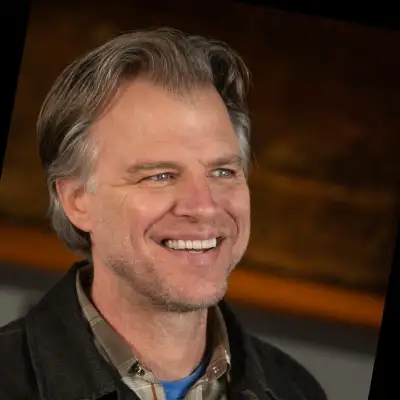
[00:00:00] Joshua McNary: Welcome to the BizTech Superhero, the podcast that empowers you to unleash the technology superpowers within your business. I'm your host, Joshua McNary. I'm joined by today's superhero, Steve Shriver, CEO of Ecolips and Bug soother based in Cedar Rapids, Iowa. Steve is a serial entrepreneur who was founded.
[00:00:18] Joshua McNary: Bought and sold multiple companies across several industries, and like any real entrepreneur, he's also had a few interesting failures along the way. Today, he owns five businesses in five different industries and has advised hundreds of startup founders as they work to gain traction and build sustainable companies.
[00:00:37] Joshua McNary: His largest company, EcoLips is a certified B corporation built around what's known as the triple bottom line people, planet. And profit. That philosophy shapes how the company approaches its employees, its customers, the community, and the broader impact businesses can have on the world. Across the companies Steve has founded, those companies [00:01:00] have now generated more than $1 billion in retail sales.
[00:01:04] Joshua McNary: Today, Steve and I will talk about the realities of entrepreneurship, what it takes to build companies that last, and how purpose and good. It can actually work together for business. Of course. We'll also talk about how technology has helped him through his entrepreneurial endeavors. Steve, welcome to the show.
[00:01:22] Steve Shriver: Thank you. I'm excited to be here. Thanks, Josh.
[00:01:25] Joshua McNary: So for folks just meeting you for the first time, could you share a little bit more about who you are and what you do?
[00:01:30] Steve Shriver: Boy, after that intro, it's a little difficult. You summed it up. I am, yeah, as you said, a serial entrepreneur. But I also realized early in my career that. If I wanted to sleep at night I needed to, balance the good that we're doing in each of these businesses with the profit motive.
[00:01:50] Steve Shriver: And I'm definitely a capitalist, but I think of myself as a responsible capitalist and just trying to, do as much good as possible. And keep it in [00:02:00] balance.
[00:02:00] Joshua McNary: Maybe I'm an idealist, but that's what capitalism should be, from a standpoint
[00:02:03] Steve Shriver: thank you.
[00:02:04] Joshua McNary: of helping people and making money. 'cause you have to be at a, pay the people and pay the bills but also do it in a way to actually help people. And I, that is the right way to do business.
[00:02:13] Steve Shriver: yeah. One thing too I always neglect to say is I. Met my wife, she was a rock climbing instructor, and I had a mountain guiding company was my first, one of my first companies. And so the mountains have been pivotal experiences in applying to business, like practices and just saying, if we gotta, if we gotta set up a base camp, set up camp one, camp two, it's goal setting, it's fitness, it's training it's practicing.
[00:02:39] Steve Shriver: It's knowing when to quit to save your life, and yeah, so just throwing a little bit of mountaineering into the conversation.
[00:02:46] Joshua McNary: That's great. When we can mesh our interests in life, our hobbies and all those things into what we do, that's finding the passion. And I know you're a passionate person around many things including outdoors. But. Finding that passion and then being able to apply that to our [00:03:00] work is so important.
[00:03:01] Joshua McNary: For me it's always been technology since I was, a kid, I was always interested in technology and I've been able to ride that wave in different capacities and so have you.
[00:03:08] Steve Shriver: And related to that it's a good point. It's business, I had a Monday that I wish I'd never had this week. And it just kicked my butt. But I like to think back. It's okay, all I need to, it's like I just I need to. Got my way through this, and no matter what, it's not as bad as that time that I was stuck on a fricking mountain in South America, and almost lost my life.
[00:03:29] Steve Shriver: So it's kinda it's a bit of a reset. It's the harder things you do outside of business in terms of challenging yourself and your mind and your body the easier it seems to, to run the business.
[00:03:40] Joshua McNary: This is not meant to be a outdoors podcast today, but . I was gonna bring up that I like the outdoors too. I don't know if you knew this about me, but I've been making regular trips to the boundary waters in Northern Minnesota. For the last number of years and getting out in the back country.
[00:03:54] Joshua McNary: And this year I'm hoping to do some more hiking and things. So I appreciate what you're talking about. 'cause it does, it gets you away from the screen for [00:04:00] one, especially a technology guy like me and or you sitting at your desk. And then also that idea of it, it puts you in that mindset of what can you actually accomplish? Beyond what your day-to-day, cushy American life is like, right when you're out there in the wilderness and doing things and recognizing how strong you really are mentally and physically.
[00:04:19] Steve Shriver: Yes. And sometimes you just might get the best ideas once you're finally in a relaxed situation or in the nature. Yeah.
[00:04:26] Joshua McNary: Absolutely. Yeah. It's it changes your perspective entirely. I also love astronomy too. That's another one of my passions. So that's whether it be in the backyard or, in those areas when you can look around and see the all around us. That's a side note to our business podcast today.
[00:04:38] Joshua McNary: But it's important because it does relate to the fact that it gives us space. Then when we come back to technology, come back to our businesses to be able to think and grow like you were talking about, and put things in perspective.
[00:04:49] Steve Shriver: Yeah.
[00:04:50] Joshua McNary: So Steve, tell us a little bit more about your different businesses.
[00:04:53] Joshua McNary: Obviously EcoLips is already been referenced as your largest business, but for those that are listening, talk about kind of some of the other businesses [00:05:00] you're in too, because I think that will relate to how we look at technology in your world. I.
[00:05:04] Steve Shriver: Yeah. So eco lips is obviously the, the is the big one. We've got a hundred employees in a hundred thousand square foot building here in Cedar Rapids. And we started with a Turkey baster in our kitchen and started filling these lip balm containers with a Turkey baster.
[00:05:20] Steve Shriver: And so it's really cool to, to have it 20 plus years in and see. You know that it, we've created a sustainable business and a lot of good jobs. Besides that, we purchased bug soother, which is an insect repellent purchased that about five years ago and expanding distribution. And it's a beautiful natural product that, you can't spray too much of it.
[00:05:42] Steve Shriver: You're not gonna offend anybody. And it, and, but the, it smells great. The bugs hate, so
[00:05:46] Joshua McNary: Smell smells great. I use it regularly. Yes. That's my go-to if I, unless, I'm in the back country and I need the, the heavy duty, deep stuff. Although I know you guys have a heavy duty product too.
[00:05:54] Steve Shriver: we just came out with it and it's you, we'll have to, you'll have to
[00:05:57] Joshua McNary: I had to try that next time.
[00:05:58] Joshua McNary: Yeah. Okay. Go on.
[00:05:59] Steve Shriver: [00:06:00] But so then, it was early on when we were located downtown and we maybe had 30 employees down in Nobo. And we, there was a coffee shop for sale, a fledgling coffee shop, and we were like, that would be, it'd be great for our employees and it'd be great for the community if there was a really institutional place.
[00:06:17] Steve Shriver: And so we rebranded it to Behnia. And just became over the years have become the fa the busiest independently owned cafe in town with a line out the door. And it's it's awesome to have that sort of be some people's third space, some people's anchor for food, beverage, community, and so that was like our first foray into expanding out of.
[00:06:41] Steve Shriver: Eco lips. And then we recognized with some friends of mine, we recognized that there is no out, there's no outdoor store, locally owned in town similar to active endeavors in Iowa City. Like that just doesn't exist here. So we put our heads together and came up with Silko Outfitters and it's like camping store, we've got [00:07:00] footwear, camping gear, apparel, accessories.
[00:07:03] Steve Shriver: And so it's been great. From day one community has supported that store and it, we've, we found a niche that we that we believe was needed. And then we've got the Olympic. South Side Theater. It is a 10,000 square foot event venue above Bohemia. And we have, we do everything from live music to weddings, to private events, corporate events.
[00:07:24] Steve Shriver: And yeah. And then I'm also working on this other product. I don't know, this might be the sixth. It's a locking electrical plug that's patented, and so it's like a, it's called Secure Outlet and it's a. It's a patented electrical outlet, so completely out of my realm of expertise, but it's exciting and fun and safe, and so it, it is like it reduces shocks and fires and, that kind of stuff.
[00:07:47] Steve Shriver: So fits with my ethos,
[00:07:49] Joshua McNary: Cool. That's awesome. And as people probably recognize now, if they didn't know you before this listening to this, you're a busy guy. You do a lot of stuff. You you like to get busy with these different things, not a [00:08:00] lot other community events and things I know you've been involved with and just fun things you've done along the way or outdoor activities and things.
[00:08:05] Joshua McNary: That's great.
[00:08:06] Steve Shriver: Yeah. And even during the flood, no, let's see here. The Derate show, no COVID I did, I had three different really large community projects I did for whenever there's catastrophe in town. During c we kept hearing, the shortage of hand sanitizer. And we knew that we know how to make it, but there was a shortage of.
[00:08:28] Steve Shriver: Grain, alcohol and alcohol. And so we partnered with Cedar Ridge distillery and we took our formulation team and our manufacturing expertise and blended it with their alcohol and their knowledge. And we were able to create hand sanitizer when it, when there was none. And we gave out 5,000 bottles for free.
[00:08:48] Steve Shriver: In a non-touch drive through situation. And we also ended up selling to hospitals, municipalities, but just it was a need in the community and the world. We [00:09:00] wanted to use our strengths to serve that. So that's like every, that's like, whenever there's that opportunity, I'll drop the capitalistic side and just say, all right, I got, I'm gonna jump in here and help.
[00:09:11] Steve Shriver: And do what I can and then jump back into business.
[00:09:14] Joshua McNary: Yeah, that's great. The energy that you exude every day is so inspiring. And this, I, we haven't had a chance to talk for a little while. We've known each other for a long time, but it's so much fun to chat with somebody that's, thinking about things in this positive manner and just to take action, right?
[00:09:28] Joshua McNary: Whether it be COVID or whatever the thing is the business opportunities, the plug that you
[00:09:34] Joshua McNary: All those things.
[00:09:35] Steve Shriver: Yeah. And I like the, like I'm an idea guy and, but I also, I think I, and I idea is a four letter word, just like the real four letter words, because it's just the first part of, but the execution is the hard part. So like you can have an idea, you're gonna come out with a new product or a new company, or help the community in some way, but.
[00:09:54] Steve Shriver: It's nothing unless you do something about it. So I like to look at ideas as just the [00:10:00] entryway to the real journey. Like you can't deposit ideas in the bank,
[00:10:03] Joshua McNary: in your bio, I mentioned that you work with various other entrepreneurs trying to help them in that way. So I'm gonna just throw out a little nugget here that relates to what you were saying is that I know whenever I'm getting frustrated in my work, it's usually 'cause I'm not taking action. It's that, that it's actually that taking that next step, actually doing something that was part of this podcast being generated, which is let's just do this.
[00:10:24] Joshua McNary: I don't know exactly where it's gonna go, but let's just do this and then I'm sitting here talking to you, getting inspired. So that's the idea of those. Taking action and moving forward. Oftentimes you need to put a little strategy in to make sure you're doing a good job on that, right? You don't wanna be willy-nilly along the way, but at the same time, taking action is so powerful.
[00:10:42] Steve Shriver: And that's my, I was talking to my uncle who was a former ranger, army ranger in Vietnam. And in his, I was telling him about how I run the business, and he was like and he said to me, he was like, oh ready, fire, aim. So you you know you're ready yourself, and you start firing and then you aim as you're [00:11:00] getting, honed in.
[00:11:00] Steve Shriver: And I was like, holy crap. That's exactly what it is. I don't wanna get caught up in the details too much, and so it's just let's just start, move forward. We might fail, we might learn along the way, but let's just start.
[00:11:12] Joshua McNary: Okay, Steve, so I wanna talk about. The technology side of your world a little bit. So what are you doing day to day with tech? I mean, obviously you're, you're using your office computer or whatever, but tell me what, what do you find useful or not for someone like you that's, uh, an idea guy with action?
[00:11:28] Joshua McNary: How, do you apply technologies and what have you maybe seen over the last decades that's worked or not worked in that realm for you?
[00:11:35] Steve Shriver: Having gone from the Turkey baster to the to the automation that we have we're right now making 30,000 units per hour of something out in the warehouse here in the manufacturing area. Our, when I, my first thought of technology is automation, and so we went from a lot of handmade processes that were, giving people carpal tunnel and whatnot to creating automation.
[00:11:59] Steve Shriver: We [00:12:00] did we had 150 employees at one point, and we got down as low as 75 after we added the automation. But we were, and are a more stable company with that equipment and function. We're back up to a hundred people. And as we grow. So we didn't necessarily, we didn't add it to create jobs.
[00:12:19] Steve Shriver: We added it, the automation to create efficiencies and grow. 'cause we were. Reaching limitations. In the manufacturing area, we have a program called Red Zone, and we've got sensors on every, gosh, every few feet on our equipment that, that feed into this software.
[00:12:36] Steve Shriver: And there's screens up in the area where. You can see who's making what line is performing the best who needs a maintenance call, and we also, it's interesting over the years, like everybody here walks around with even, production folks walk around with a tablet because that's how we're running the, running the red zone and communicating and documenting everything.
[00:12:57] Steve Shriver: So that's been huge for us to know, start [00:13:00] time, end time has helped us hone in our business skills. But we also, it's like being 20 some years old. We're stuck in Excel QuickBooks. We have an access data access database for some product flow.
[00:13:14] Steve Shriver: We're using Trello for some things. There's probably, shoot, then we've got Paylocity for the payroll side of things and, oh, and then we have a, some software called QT nine for our quality assurance department. And it goes, it's like the list goes on and on. So we, it's working.
[00:13:31] Steve Shriver: It's got us this far. But we're recognizing limitations, having, all this these programs don't talk to each other. It requires a lot of human input, and we are more prone to make mistakes when we're, using seven different. Programs to complete a job. So we are investing in an ERP we're launching this year.
[00:13:52] Steve Shriver: We've been working on it for a couple years. It's called dcom. And it should bring everything together. It's gonna be [00:14:00] a rough road we're training right now, but it'll minimize. It should get us down to, almost having, should, majority of our functions should be happening in dcom.
[00:14:08] Steve Shriver: Technology's huge. I've thankfully got a team that supports, the manufacturing side of things. And so I don't necessarily need to be the one that initiates it. However, like we've just started using chat, so I got some people, some chat GPT subscriptions here. And we're just toying around with it.
[00:14:27] Steve Shriver: Like I think a lot of businesses are. But not, and it, we're starting to use it in finance a little bit. We're using it in sales and marketing obviously, but I'm looking forward to when we can really have, red zone feed decom and have everything talking to each other, where it at we can discover things that we didn't know about our business,
[00:14:48] Joshua McNary: there's a lot there. Steve.
[00:14:50] Joshua McNary: That's great. No, but that's awesome. The fact you're thinking about all these things, as a business owner shows how progressive you are and always thinking forward, and so I appreciate just the [00:15:00] dialogue there and always, hearing your brain come out in the, in that conversation.
[00:15:03] Joshua McNary: So I wanna, there's multiple. Parts there. I wanna maybe dissect
[00:15:07] Joshua McNary: here the time we have, so starting with the automation and the hardware and the stuff there, we'll start there. But then also we'll come back to the ERP, your kind of like database integration components. And then perhaps a little bit of that AI stuff you started to bring up.
[00:15:20] Joshua McNary: So let's maybe go back to the first one, the automation element of that. I wanna ask how. Customized is that system for your line. You guys have a specific product, right? And you guys had to go out and procure these systems, and I imagine they have to build the lines and then, and so how locked in are you on that?
[00:15:39] Joshua McNary: How long have you been using that system and, what are maybe some of the pros and cons of that? It's awesome. The pros you've said, but what are some, maybe some of the cons of that whole process?
[00:15:49] Steve Shriver: It is. So in the early days, we, okay, first of all, there's no off the shelf. Lip balm, manufacturing equipment. And so in the early days we went [00:16:00] to a company that did liquid filling. We bought a machine from them, they tested it in their facility, sent it to us and it, they tested it with water and we're, we fill molten.
[00:16:12] Steve Shriver: Product. And even though it had molten capabilities, they never actually ran our product through it. So we sat here with this, this big big machine that we couldn't do anything with for a long time. And so we learned a lot through that process. And we've got like six different production lines right now that fill different products.
[00:16:30] Steve Shriver: And yeah, the automation piece, it's a, it's even when it's tested and it and it performs and. We get it on site. There's wear and tear, there's maintenance, there's things that, that simply don't work on them. And so it's a, it's an ongoing challenge and we just, we do continuous improvement and we also have an engineer on staff that, and a maintenance team.
[00:16:55] Steve Shriver: And we just try to be proactive with our equipment. But it's definitely [00:17:00] challenging having, it's especially when your income relies on, your company income relies on this automation working, like we can't we can't, our machine can't go down. We have some redundancy, but we just can't have it.
[00:17:14] Steve Shriver: We can't afford to have a machine go down.
[00:17:16] Joshua McNary: That's your entire business at this point with regards to actually developing the product, right? It is the core thing that makes everything go, and I've seen the same thing in various software applications or e-commerce spaces where you know that's it. If that breaks you're out, you offer a day, you're out that money or that product, and then you have other problems.
[00:17:32] Steve Shriver: It's like when the internet goes down, right? My customer service and sales, we can't function, so then it's like, how do we, okay, how do we build in systems that can support the internet down, but we, yeah, we just, it's one of those things, but it's also just part of business.
[00:17:50] Steve Shriver: It, if things aren't gonna go perfect you just do the best you can along the way and hope for the best.
[00:17:55] Joshua McNary: And then you had to balance, of course, the budgeting of like, how much do you invest in the. S [00:18:00] precautionary stuff, the proactive versus the reactionary, and that's
[00:18:02] Steve Shriver: Yeah, we have
[00:18:03] Steve Shriver: a,
[00:18:03] Joshua McNary: technology.
[00:18:04] Steve Shriver: yeah, we have a right and we have a parts room. And I guess I'm talking, physical parts. But yeah, it's like we have a parts room and of course maintenance would like to have three or four, extra parts of the same thing. Just in case. And it's, each one of these parts.
[00:18:16] Steve Shriver: Costs money. So it's two enough, is one enough and what's the supplier situation? Can we get it sent in? And yeah. So it's in thinking about technology, we've had to, we continually invest in power in this building just to support all the manufacturing. And it's the more technology you have, the more power you need.
[00:18:35] Steve Shriver: And that's something that I had no idea. I'm just like, oh yeah, a big warehouse. It's gonna have. Why wouldn't it have a bunch of power in it? It's it doesn't have enough for you, so here's a $50,000 bill to add. Add the power requirements you need. So yeah, it's crazy.
[00:18:51] Joshua McNary: Yeah, the technology just takes more and more juice as we are here sitting in, in 2026 recording this and lots of concerns about, the AI [00:19:00] needs for power and how we're going to power data centers and power the AI revolution let it go, and all the power we've been using for all the other things we've been doing the last
[00:19:08] Steve Shriver: It's happening really fast.
[00:19:10] Joshua McNary: All right, so let's hop back to the ERP thing or the data connection thing. So what you were describing earlier about all the disparate systems, you've been doing the what did you say? Ready, aim, shoot, or no?
[00:19:22] Steve Shriver: Oh yeah. Red. Ready, fire,
[00:19:24] Joshua McNary: Ready. Fire. Aim. You've been doing that for a number of years.
[00:19:26] Joshua McNary: And that's. How you wanna operate. But then that does often create the situation you're in with the technical debt of all these different systems. And that's okay because you're figuring out what actually is working. And then now you're going back and looking at it from the strategic perspective to say, okay, how do we actually make these things work together?
[00:19:42] Joshua McNary: Now the cautionary tale there is you don't wanna put yourself too much in a box, just like I was saying with regards to the automation systems. You can't, you have to pick a direction, but then you don't wanna. Take away that opportunity to be flexible as you're doing that. And that's
[00:19:56] Steve Shriver: I'm worried.
[00:19:57] Joshua McNary: whole conversation.
[00:19:57] Steve Shriver: I'm worried about it. I am [00:20:00] scared that there will be a major function that we overlook or something is not calculated right in the ERP and it throws our inventory off or it changes something. Luckily it's not gonna touch our formulas, so that's a separate thing.
[00:20:17] Steve Shriver: But yeah it's a, I'm worried about launching it and because we don't know what's gonna happen, but we put a lot of planning into it. We got a good team running it, so hoping for the best. But also, I don't think you hear many companies there aren't many out there that say, yeah, we switched to our ERP and everything went great
[00:20:35] Joshua McNary: there's always something. 'cause you have all these years of knowledge and system and I, you use the term technical debt in place there already and. There's that comfort level of knowing, okay, maybe it's fragile, maybe it's not connected well, but at least I know what it is and now you're making that
[00:20:50] Steve Shriver: It's right, it is challenging, but it's not broken. And so that's the, the back and forth we do with this. But yeah, you're totally right. It's yeah it's comfortable to see. [00:21:00] The Excel worksheet, that we use for certain things. So it'll be interesting.
[00:21:04] Steve Shriver: But I think also going from, small company to medium we have to, we, we might not have a choice. We have to adopt an inward and we're just gonna have to, gut our way through it or grunt our way through it.
[00:21:18] Joshua McNary: And that's the positive side, right? The ability to build those efficiencies continue to scale what you're doing. Add some more lines, whatever it might be that you wanna do, whatever that looks like for you in the future. That's the plus side and why you're doing this.
[00:21:31] Joshua McNary: And you're gonna have gotchas, there's gonna be some gotchas, but of course, you know how to adapt. You've done this a long time, longer than I have with regards to making those adjustments. And you're gonna be fine. But yeah you gotta go in with eyes wide open. It sounds like you've done things strategically and again, you have a team there that, helps you along the way, so you're not the only person responsible. You've got a lot of good people around you.
[00:21:51] Steve Shriver: But it's also like D there, each department is. Probably prioritizing the ERP differently. And they're [00:22:00] meeting, as a full group once or twice a week, and then they're meeting sub subgroups. But it's I, one department might not be taking it as seriously.
[00:22:07] Steve Shriver: It might not be training as well as another department. And you just, you, you hope that, at some point, if they want to produce the work that is needed, they're gonna have to adopt it. So it will happen. But it, again, it's not like everybody is 1000% aligned with the objectives.
[00:22:27] Steve Shriver: It's my department has this thing going on, and, and or, again, back to we don't know what we don't know about this. Yeah, we're gonna figure it out.
[00:22:37] Joshua McNary: It is change management in that sense. You mean it's, how do we. With our people and our processes, make this big change. And obviously you have these processes and systems you've had before, but now you're bringing the new system and then you have to train on that. And there's probably some things being updated or improved along the way, hopefully improved, not being lost.
[00:22:53] Joshua McNary: Yeah, there's a lot there. And that relates actually to this other topic I was gonna bring up, which was you brought up AI and doing some things with [00:23:00] chat GPT internally to the business. That's also an area where I've used the term change management a lot with people lately because it's really about the processes first and then how do we change what we're doing with this new technology along the way.
[00:23:14] Joshua McNary: So it relates to what you're talking about. You guys in your ERP systems and then as you bring your data together and your this new ERP system, you're gonna have the opportunity to leverage AI with that data. Because having a data silo in that context will allow you to allow the AI to help you.
[00:23:29] Steve Shriver: Yes, absolutely. I was talking to John. I wanna see if John Snip white and he,
[00:23:36] Joshua McNary: a friend. Yep.
[00:23:37] Steve Shriver: yeah, so we were talking about AI and he informed me of a. MCP is the model concept, protocol. This is the thing that's gonna get, so in the old days, what's it now?
[00:23:49] Joshua McNary: APIs.
[00:23:50] Steve Shriver: yeah, APIs, right? So I took notes talking to him and I'm like, oh yeah, 'cause I need, I still need, there's still programs that I need to talk to each other, right?
[00:23:58] Steve Shriver: And I see. [00:24:00] And maybe some of them can be written. They're gonna be AI based, but they could also be written by ai. And I am excited about that future.
[00:24:08] Joshua McNary: What do you think the practical. Maybe the change management concepts around your staff and applying this, you're. You're a go-getter, you're gonna try these things and you're considering them already. But as far as the staff around you and actually applying AI in a practical business sense, that's, I think earlier you said, we're messing with it.
[00:24:28] Joshua McNary: A lot of businesses are messing with it. And I've seen that over the last years. But now there is a little bit of a shift more towards what can we actually produce with this here in 2026. At least in our, in, in our local region where we're both located I'm seeing that shift. What can you say about that? What do you think how that, how do that's gonna go? Do you think people are gonna, are they gonna be scared of it,
[00:24:45] Joshua McNary: Or, yeah.
[00:24:46] Steve Shriver: The first thing that comes to mind okay, overall it's like we have an entrepreneurial culture here. Like you, we like, if you can't it's a bit of a sink or swim environment. We don't, we're, it's if you can't hang with the company, then you [00:25:00] know you might not be in the right place.
[00:25:01] Steve Shriver: So we do have, and we have, because we've grown so much over the years. We, we, people adopt change pretty well. It just depends on how fast it comes and of course, like what kind of day somebody's having or week somebody's having, or how busy we are. But we did have, so I'm hoping, in general, it seems oh yeah, cool.
[00:25:20] Steve Shriver: This is what we do as a company and as eco we continue to improve. And it's gonna be, there's certain challenges that come with it. I did have. My, one of my graphic designers said, as I mentioned, AI and he, he was clearly not. Supportive of it. He's he's an artist, he's gonna, and I respect that so much.
[00:25:41] Steve Shriver: I'm like, he's gonna, I'm like, you could just have creating a dieline for something. You could probably just instruct AI to create that for you or something. But he's gonna, he's gonna do it old school and draw it out. And I will say, I think the quality, his, obviously the quality of his work is better, right?
[00:25:56] Steve Shriver: AI doesn't, isn't perfect. But we, [00:26:00] i'm sure there is going to be some resistance, especially because, we do, we also we're a natural products company. We're a little bit hippie dippy, ai, the data centers that are coming in and the, the water issues that go along with that.
[00:26:12] Steve Shriver: There's certain people here that probably don't want AI to succeed because it's potentially going to kill us all. Or mother nature or and but again, it's like, all right you work here, this part of the deal, let's, I'll listen to any challenges that you have with it, but we gotta, we, we need to stay competitive and, all our competitors are using tools and probably can afford more than we can afford. So we need, if you, if we want to keep our jobs, we need to adopt this technology.
[00:26:42] Joshua McNary: And if we look to the past for reference, we're all walking around with these mobile devices and, different things that, 10 years ago wasn't a thing. And we now see how much they've. Dynamically changed our lives. And so these, we don't really can't predict the future of how exactly how this is gonna go, but we have to at least be on the lookout.
[00:26:58] Joshua McNary: And it sounds like you guys are starting that [00:27:00] there's this element of these different concepts. You're talking about the.
[00:27:05] Joshua McNary: Objections that you've been bringing
[00:27:07] Steve Shriver: Oh yeah.
[00:27:07] Joshua McNary: that, I've heard over and over again in my work over the last few years and more recently as I've been doing more work around artificial intelligence and building communities around people talking about that in our community.
[00:27:18] Joshua McNary: And they're all relevant things, but it's also the element of some of the concerns we have now, whether it be the water or the environmental factors, for instance, like those might end up going away. There might be new ways of doing these same technologies that have less of an impact in these. So we can't necessarily
[00:27:32] Joshua McNary: stay well, we stop just 'cause of that.
[00:27:35] Steve Shriver: Yeah. And it might be that it might, AI might give us the answers to that if it gets good enough, so
[00:27:40] Joshua McNary: Even in the last few years as these tools have gotten better, and this is true, again, you've seen this over your entire career, around all the things you were doing talking about the filler that you had originally, that wasn't very good, and now you've got these fillers that are like, awesome, right?
[00:27:52] Joshua McNary: The idea that the technologies themselves actually improve over time as you. Focus in on them. And that's gonna be even exponentially more with [00:28:00] artificial intelligence for all of us, whether we're a, solepreneur, small business, mid-size business enterprise, whatever, we're all gonna be affected in that way somehow on the way, barring any major catastrophe in the world.
[00:28:10] Joshua McNary: And, we're not always gonna want that. So I look forward to seeing how you guys adapt to that and adopt that and continue your technological journey. And I think this system you're talking about right now is gonna help you guys immensely to be
[00:28:22] Steve Shriver: Should check back in a year and see how
[00:28:24] Joshua McNary: Yeah, that'd be fun. Let's schedule the follow up podcast.
[00:28:26] Steve Shriver: I gotta say, this is also like why I love Bohemia at the coffee shop, because we don't, it's just it's like we have a kitchen and we have a espresso machine and very little technology other than our point of sale. And it's it's just a, it is a beautiful, it's complicated, but it's simple at the same time, and I think it, it just, it makes you appreciate, analog business,
[00:28:52] Joshua McNary: yes. And we would hope that is gonna remain for quite some time. And that human connection you guys have at that coffee shop, which I frequent [00:29:00] usually at least once a week for lunch and often for coffee is an example of where we're having that. Personal connection of some form you have just a hello.
[00:29:07] Joshua McNary: And there's no one of that we have to retain as we think about these things. Going back to where we started this conversation around, being about people as well as profit and the planet, as your, as you go, as your EcoLips phrase goes. And it'll be interesting and important that we continue to think about that as we apply these technologies, as we always have, as we should.
[00:29:25] Steve Shriver: Yeah, absolutely. And that's where it's as a triple bottom line company, when we talk about people, it is it's all stakeholders, not just the shareholders. So most companies are just about the shareholders. Stakeholders are, community members are suppliers. The, our employees, anybody that's, that, that is, is affected by our company.
[00:29:45] Steve Shriver: And that's a really. Important part of everything that I'm involved in is just really embracing all the stakeholders and just understanding that business has impact. And you could use it [00:30:00] for bad or you could use it for good, and I try to use it for the force of good.
[00:30:04] Joshua McNary: As our technological change continues, I hope that, your example will be applied to technology. And as we think about these things in our local communities that you and I both frequent, but also, as we go forward, as a society, with these things because it's is important and I'm glad we'll be able to touch on that today in context to your business and your technology.
[00:30:22] Steve Shriver: Definitely.
[00:30:23] Joshua McNary: We do need to wrap it up here, so I'm gonna bring us down to the final question I ask everybody here on the show, and that is, what is one actionable tip that you would give businesses looking to better leverage technology?
[00:30:34] Steve Shriver: Just try something. Try, just get out of your comfort zone. Try something new. It might work, it might not work. You might learn something along the way, but don't be afraid to get outta your comfort zone and try something new.
[00:30:49] Joshua McNary: Great advice.
[00:30:50] Joshua McNary: Steve, this has been great. Where can people find out more about you Online?
[00:30:55] Steve Shriver: Ecolips.com. Bugsoother.com. brewhemia.com. [00:31:00] Sokooutfitters.com, theolympiccr.com. Yeah, on a personal level, just, I, I don't post much anymore, but also, I'm like on the entrepreneurial side of things.
[00:31:09] Steve Shriver: My email is steve@ecolips.com and if somebody has questions or if they think I can help 'em, gimme a shout.
[00:31:16] Joshua McNary: Perfect. Thanks for joining us today.
[00:31:19] Steve Shriver: Yeah. Thank you.
[00:31:20] Joshua McNary: Alright folks. That's it for today. Be sure to subscribe to this podcast on any of the popular directories. Tell a friend about what you've learned here on BizTech Superhero and subscribe to my e-newsletter at McNary marketing.com/subscribe. Thanks for listening. I'm Joshua McNary and I hope you will join me again next time so you can learn how to become a biz tech superhero.
[00:31:42] Joshua McNary: Bye now.