Behind the Mic: Radio Host Doug Wagner's Journey Through the Airwaves & Technology
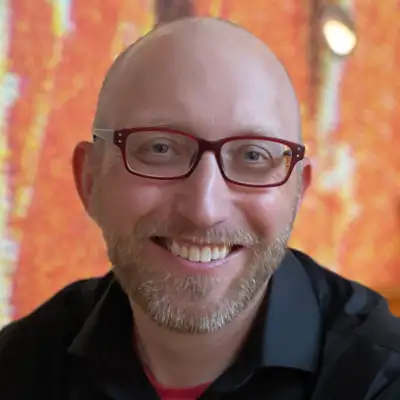
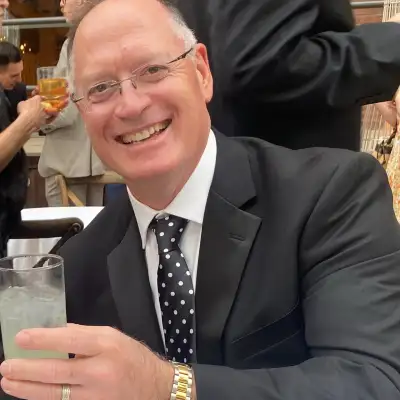
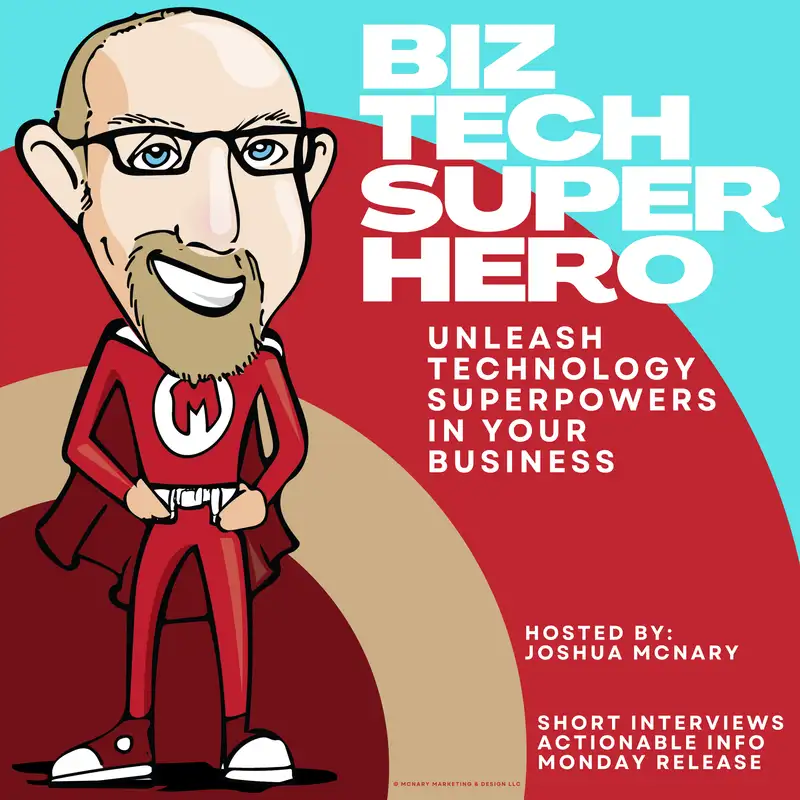
Welcome to the BizTech Superhero, the podcast that empowers you to unleash the technology superpowers within your business. I'm your host, McNary. I'm joined by today's superhero, Doug Wagner, morning talk show host on NewsRadio 600 WMT and NewsTalk fourteen twenty WOC, both iHeartMedia stations based in Iowa. Doug has spent decades working at the intersection of media, public policy, and leadership. His background spans nonprofit organizations like United Way, school districts, and multiple levels of government.
Joshua McNary:Along the way, he's worked in communications, marketing, public relations, along with crisis response, and has been deeply involved in how organizations and communities communicate during both everyday operations and critical moments. Today, Doug and I will talk about the changing role of media, how communication and leadership intersect with public service, and how technology is shaping modern radio and helping communities stay informed in a rapidly shifting information landscape. Doug and I actually go back quite a ways. I've had the chance to join him on his shows regularly for more than a decade, talking about technology and business. So it's fun to finally flip the script and have him join me here today.
Joshua McNary:Doug, welcome to the show.
Douglas Wagner:Joshua, thanks for having me on. I appreciate it.
Joshua McNary:So for folks just meeting you here for the first time, could you share a little bit more about who you are and what you do?
Douglas Wagner:Morning show host over two AM radio stations, both nearly 104 years old. So it's one of the older forms of broad communication. This could get to areas where newspapers didn't I mean, they weren't necessarily able to get because you could maybe print a newspaper, and then you could take it thirty, forty miles with radio, AM radio. You can make that go hundreds of miles. My morning show actually hits five states, and then when I get to fill in from my buddy, Simon Conway, on NewsRadio ten forty WHO, it's a 50,000 watt signal that goes from Canada to Mexico, from the Alleghenies to the Rockies.
Douglas Wagner:And it's nice to be able to have that reach, and it's also something that is awe inspiring to be able to have that too because that technology, specifically that 50,000 watt one, was one that was instituted in and around the second World War. If there was a a key area that was taken out of The United States, you had six or so 50,000 watt, what were called clear channel stations that could broadcast across the country the same thing from Washington DC or whatever war command was in order to make sure the people were both well informed as well as be able to get the information into them as well. And you take a look at where everything is now. The iHeartRadio app is one of the most downloaded apps in the world. The iHeart podcast platform is one of the the number one podcast platform.
Douglas Wagner:And it's just remarkable to think that I started back in college in the nineteen eighties with splicing tape and a razor blade, and now everything's done with the click. And now it's even better than that. There's some some machines that you just tell it what to edit, and it just goes, and it does its own thing. It's absolutely phenomenal. You're right.
Douglas Wagner:Public policy, a lot of stuff. Worked at Capitol Hill, worked at municipal government, ran a nonprofit, affordable housing entity, and I did done a lot of public polling. And I watched technology in all these areas completely change and upend the way that we live our everyday lives.
Joshua McNary:There's a lot to get into there. Looking back at the history of radio and then whether it's the public policy stuff, which was crazy. I started my career in DC. So there's lots of there's lots of lots of angles we could take on this, but maybe we'll start with that idea of generations before looking at radio, looking at TV. We think about our parents and our grandparents that came up in that era and how they looked at technology.
Joshua McNary:I don't know if I've told this story on this podcast before or not, but I have in other venues that I remember in the eighties when I was coming up, my dad had an old CB radio in the house that he had used in his car. And I remember being really intrigued by that device at that time. And now it's like ancient history. Right? And where we're looking at these days.
Joshua McNary:So not to make ourselves sound like old timers. From a standpoint of just the what we've seen in our lifetimes, really going from emerging technological age to what we're seeing now with artificial intelligence and all the crazy things that are possible here in 2026. Do you have any big picture thoughts initially because you've worked in so many different areas and any themes that you've come across?
Douglas Wagner:I do. And part of it gets to the idea. My father was born in 1922, the same year that WMT and WOC were started, and he learned how to speak Czech by listening to the old Czech ladies or we would call them the old Bohemia ladies on the party line, and that's how he learned how to speak Czech. And he was able to parlay that later in the life as a lead singer of the number one country and western dance band. I was Leo Grieco and his pioneers that was based in at WMTTV and literally the soundstage where they performed on a weekly basis and were filmed.
Douglas Wagner:And there are only two films remaining that are out there of them performing back in the nineteen fifties was literally 20 feet to my left as I'm sitting in my studio. That was the old soundstage number 2. There's not a lot left from a number of different places because film deteriorates. And if you don't get it put into something and you see all these commercials, hear about these commercials about digitizing things. Well, now we live in what a lot of people consider to be a digital wasteland.
Douglas Wagner:There's so much stuff that's out there to consume that it covers micro niches that you and I really don't care about. But if there are 1,500 to 2,000 people across the Earth that do care about it and are interested in monetizing it, people can do that, and they can make a living on it. And it's really completely changed the way that we have to approach in the mass media industry such as AM radio or podcasting or webcasting, how we reach out to people. We have to be able to be local at the same time that we have to be brought in or reach. It's like take the national story.
Douglas Wagner:Unfortunately, the big national international story now is operation epic fury. Three Iowans killed amongst the seven, and that's something we've been able to focus on that very few others have been able to because they come from our hometowns.
Joshua McNary:Yeah. That's interesting. This change in how media is done. This is a common theme in that word. This is not necessarily specifically about media here today, but in my little show here is a niche.
Joshua McNary:Right? And Mhmm. You are a niche within this local region, but you're very broad in the sense of not looking you have a very broad audience is what I'm trying to get at in that sense. First, once you're talking about these niche communities, I basically just watched YouTube now. I don't really watch television except maybe for sports.
Joshua McNary:And in that sense, I my channels I listen to for or watch for hiking and for technology and for Yeah. Hockey and golf and whatever it is that I'm into at that moment. So I think we're all in that landscape. So how do you cut through or or maybe tell us a little bit more about the positioning or maybe how it's evolved since you've been at your current job in local media. You got to it a little bit in that last comment.
Douglas Wagner:But Yeah.
Joshua McNary:Maybe where does it come from, maybe where do you see it's going?
Douglas Wagner:Yeah. It's come from delivery of local and regional news, weather, and sports, and now it's something where you have the ability to segment your channels so that while I'm doing my interviews between five and seven minutes long, you go to a commercial break. And in that commercial break, you can insert local farm news, local traffic, local weather so that you can make sure people get the local feed that they're looking for. Meanwhile, because I broadcast in areas within five states, I do it's something I call it. It's six more things you may need to know in order to get your day started in that sixteen and 46 after.
Douglas Wagner:If I don't have a guest, I will typically focus on one of maybe 50 today, I had 63 curated stories that I have from across the listening area internationally. And what I will do with those is make sure that you can feed people information where they are, but it's still information that if I'm listening in Marion, Iowa, I'm interested in what's happening in Dixon, Iowa with the school district over there because, boy, they're going through a $5,000,000 budget gap as well. How did they approach that? The change that's been made over the years is that for what I do as far as AM radio, it used to be seen as very hyperlocal, and you had a hyper variegated I guess, a not a variegated audience at all. It was very homogenous.
Douglas Wagner:In fact, most people would say that the WMT audience is nothing but farmers, which is completely incorrect because there's lots of c suite people. And I know you understand that because you have people bounce back after you and I talk on the air. But it's changed over the years, and especially AM radio has changed significantly because it used to be a 65 to coffin kind of thing. That's the people you're looking for in the demographic. I'll give away gift certificates, tickets to concerts, and some things like that.
Douglas Wagner:There are there are regular listeners who were in their twenties, thirties, forties that listen on a regular basis because what they're getting is something that it's hard for them to find anywhere else, and that's fifteen minutes of information. Get you news, weather, traffic, and sports, everything you need to know to get your day started so you can move forward with the rest of it.
Joshua McNary:And you don't have to worry about downloading the podcast, and those aren't necessarily live anyways. Right. And you have that. Most vehicles still have a tuner in them that could pick up this stuff easily, and it's very easy to consume that way. I know when I used to have more of a commute, I was and that was a number of years ago when I was driving more.
Joshua McNary:But I was listening to Yeah. Various various local radio stations otherwise. And then I had my podcast mixed in there because I was a early adopter of such technology. That's again, starting to show my age when I talk about these things sometimes. But but, yes, that's that's interesting to hear that there's definitely still a place for terrestrial radio in that context.
Joshua McNary:And the podcasting side of things, I guess I wanna speak to that because you alluded to iHeartMedia having a powerful podcasting network. How have you seen that? I know it's changed things or it has these niches we were talking about earlier that maybe they serve. But maybe from a perspective of as a mainline traditional media outlet, like, how does that get used in the industry of radio nowadays, and how is it perceived?
Douglas Wagner:That's a great question, and it's something that I wish more people would think about because instead of asking that question, they say the question usually is, how are you gonna survive when podcasting takes over AM radio when it's no longer relevant? Been here for years. We continue to be relevant, and partly is because we keep on providing fresh material. The podcasting thing is just is phenomenal. You start out with the iHeartRadio app that does music, and iHeartRadio knew that they're competing against things like Amazon and their Spotify and whatever the music delivery service is.
Douglas Wagner:So then they have to start delivering things a little bit differently. The seminal podcast, I think that most everybody will agree is the one that tipped the world on its head is the original serial by public broadcasting. I listened to the first episode of that first series just the other day just to get a little refresh for what it's like, and I was covered in goosebumps the entire time because it's still as good now as it was then. Because when you've got fabulous production value, when you're telling a story in a way that people want to hear, that's remarkable. And it doesn't matter because most people think that AM radio is about news, politics, stuff like that.
Douglas Wagner:There's a lot of things that could be covered in podcasts and especially finding areas where people don't necessarily agree. I it it's one of the funny things because iHeart has started doing in the terrestrial radio side. They've started promoting podcasts. So Anna Navarro, who is the, quote, conservative on c n on the CNN or the view depending on when she's there, She's got a podcast out. They promote that on my station, which is just as conservative as you're gonna get.
Douglas Wagner:I think that's important because it it's a good thing to listen to and to reach out and obtain points of view with which you don't necessarily agree. And I think podcasting is a very good way to do that because you can have it delivered when you want it, where you want it, how you want it. If I'm gonna go for a two hour walk, Joshua McNary, I'm gonna have two hours and thirty minutes of podcast ripped down so that I'm listening the entire time to keep me moving. Some of them that I don't agree with because I wanna be able to expand. And I think that's a huge thing is that you can find information by seeking it out by the subject and take a little taste of it.
Douglas Wagner:You know what? I need to listen to this because I need to see what's being said by other people.
Joshua McNary:And that's so important in our society today with whether it be politics, technology, whatever. There's so much happening all the time. Right? And we have our negative view of technology having maybe put us into our little silos and have the algorithms push us in one way or the other. And this is a way that we can do that sample and be able to pick out those different pieces of parts.
Joshua McNary:And I suppose Right. Even what you guys do at AM six hundred would be another sample that someone could take. What's going on in Iowa? What's what are they thinking? What what are they concerned about?
Douglas Wagner:Let me give you an example of something happened. I was Simon Conway does afternoon drive at a WH show. It's her iHeart sister station, that 50,000 foot clear channel I was talking about. I was filling in for Simon while he was gone. It was the middle of the day.
Douglas Wagner:I had just walked out of Aldi and had grabbed a quick snip, and I was giving my car when my boss calls me one something in the afternoon. He said, what are you doing? I said, I'm just leaving Aldi. He said, how close are you to the station? I said, literally five minutes away.
Douglas Wagner:He said, I need you to go there because the rest of the Klutt and Buck show is now meaningless because we play a tape delay on a two or three hour delay. It was the day that Charlie Kirk was shot and assassinated. I get over the station, have a quick talk with my boss, and we figure out a way to link up our studio with the WHO radio studio in Des Moines, and I co anchored along with their morning show host, Jeff Angelo, four hours of talk with regard to Charlie Kirk. And it was literally following the entire situation, was able to procure guests who had personal knowledge and who had worked with them at TP USA, who had worked with him in the other nonprofits and other separate ways as well. And the moment, it was just one of those heavy moments that I'll never forget when you find out that Charlie Kirk had died, and you have to deliver that to people.
Douglas Wagner:And by that time, because we were the mobile source of information for people at that point. There were hundreds, if that thousands of people listening to us both live or over the stream. And it it could get overwhelming, but it's the immediacy that radio still presents when you do have the ability to do local. There are some stations, Josh and we know Josh, we know this, they don't have a local body in there. There's no war body in there.
Douglas Wagner:When you have the opportunity to put somebody who is a familiar face, a trusted voice, who's got a heartbeat, who is, as they say, a DieHard media guaranteed human in the seat for perspective. That is something that you have to rush people with a camera to get on TV, and there's no way that you're gonna get a newspaper or a print reporter to be able to do the same kind of reporting while they're writing their stories. It's just it's phenomenal, the immediacy, and I'm glad that radio has been able to take that from the terrestrial lane all the way up to worldwide through the iHeartRadio app.
Joshua McNary:That's great. I think that's really helps us understand the importance of this medium and then how it fits in with these different things that the technology things, the podcast things, the YouTubes, all the things. I think it relates also back to that. You mentioned the content avalanche that we're in nowadays. It's easy to find the automated, not guaranteed human versions of anything.
Joshua McNary:And there's a lot of Internet radio as well. Right? That is is great. There's some great stuff out there. I have some different apps and things I use to listen to stuff that probably is an automated radio station.
Joshua McNary:But it's great because I can go to a certain niche or whatever and enjoy my Saint Patty Day's Irish dance. Yeah. Whatever it might be. It is March 2026 as we record this.
Douglas Wagner:Yeah.
Joshua McNary:So, anyway, I wanna take a step then. Let's you were talking about that breaking news situation, the Charlie Kirk situation there.
Douglas Wagner:Mhmm.
Joshua McNary:You also alluded to the fact that you just showed up the station, had to make that big change. And part of that change is the ability to do stuff on the fly quickly because of technology. So I wanna maybe take the conversation a little bit over to what do you do? What technology stack are you using, like, in today's modern radio? And how is it different than what we're doing right now?
Joshua McNary:I use a simple microphone Yeah. Zoom, and some editing tools like Descript to actually generate what I do. So how is it different in a professional environment? And then maybe talk about how even making those connections for the guests and such. Just explain what your day looks like and how you're using technology in that.
Douglas Wagner:Yeah. Technology for me is I'll give you this is a great example. This morning, I get in there, and it says Internet not working. And, literally, I have an older desktop that is soon to be replaced with something that's new that has a basically, it's this big. Literally, that big is all it is, and it's got three, four more times computing power processing part or power than the desktop that I have now that I utilize as my audio server for error and things that I use for scheduling and stuff like that.
Douglas Wagner:Literally have to reboot my computer, and it takes thirty minutes for it to get back to its state screen so that I can then start signing in. The technology behind everything, a lot of it's proprietary because iHeart's been building this over time. But a lot of it has to integrate with other people. For example, integrating because I have to be broadcast on a WOC in Davenport. Basically, that's all Internet based, and it's somewhere between your high end business Internet and a t one.
Douglas Wagner:Somewhere in the middle is where that is, and that gets us from Cedar Rapids to Davenport. It also can take us to Des Moines and back and forth. The big hubs are connected like that so that we can take advantage of that economy's scale. It was interesting because a couple it was maybe a year ago or so. Yeah.
Douglas Wagner:It was a year maybe a year ago, we had an ice storm. And where I am at Broadcast Park, there is a 600 foot tower above me. I believe it's 600 feet. And ice was literally falling from the tower onto the roof of the building. And it was the strangest thing because I got a a note that said, you've got this station that's off the air, Doug.
Douglas Wagner:And so I go over there and I'm like, what's going on? And then I look around. I go on back in in the server rack that takes care of four to six stations, there was a hole in the ceiling through which water had been coming through, and it was only maybe an inch deep, but it was right in the servers of two of my stations that did sports radio, and it literally took them off the air. They took all of our stations off the air. For a short time, they were able to strike team there in order to get things pulled together, but it literally forced change of technology for our two sports stations that are operated out of Iowa City and then out of Anamosa, Cedar Rapids, sportswear, their Fox Sports radio stations.
Douglas Wagner:But we work with our partners in Des Moines, KX and O in order to get Iowa based stuff. But it changed the complete format to a point where I'm a year later, and I'm still learning about this new tool that we use to deliver. And there's a somebody who's the vice president of iHeartMedia who is working with me regularly in order to just bring me through it because there's no training material for it. This is something that's literally there on the fly. So I am learning from my mistakes, their mistakes, getting things to move forward.
Douglas Wagner:And technology, literally, because of the way that everything works for me right now is telephone or in person. It's never over the Internet because there's not a clean communication between my board and my computer and a microphone because part of it is the sequestering. They wanna make sure that certain things are sequestered so you can't access the air by somebody hacking through that computer and getting onto the air, including a microphone. It's intentional obsolescence in some cases that creates a situation for us where we're limited in how we do it. I love having people that who were there, but I think still people, they are fine, the over the phone like you deliver because you deliver content.
Douglas Wagner:It's about what you say and how you say it, not the medium through which you say it.
Joshua McNary:Yeah. I think I sound better on here than I do on the big radio dial because this microphone is better than my phone. But, no, we've had that conversation about about the connections online. And I think that's interesting in a legacy organization like yours, that idea of how do we use these technologies. You guys are definitely using the new technology, but you're doing it in this very intentional way, which we talk a lot about on this show and other avenues that I publish of being strategic and being intentional.
Joshua McNary:So that design op obsolescence that you're talking about is fine. There's nothing wrong with that. Yeah. And if it's being done in a way that makes sense for the organization's interests. Right.
Joshua McNary:While also thinking about how are we using new tools and things that can help us do our jobs better, faster, and whatnot. Earlier, you mentioned you had your your things you need to know, and you mentioned you had a 63, I think you said, for today. Like Yeah.
Douglas Wagner:Where does
Joshua McNary:that come from? Are you using AI or some tools to help you collate those ideas, or what how are you doing that?
Douglas Wagner:You know, it's not and it's funny you mentioned that because what I do is I start out the day. The first thing that I do after I get the coffee started and I drink my chicken bone broth to get a good shot of protein, warm protein right in the beginning of the day As I sit down, I start collating the information for sports and then for my news. And IR Radio has a basically a wholly owned subsidiary, NBC News Radio or twenty four seven news. They have a nationwide staff. All of the news and sports staff that work, they pull things together, and they create a wire, basically.
Douglas Wagner:It's the Associated Press has a newswire. The EPA used to have newswire. They create that, and I go through and find Iowa, Minnesota, Chicago, Milwaukee, Indianapolis, stuff like that. But then the stories, they have Iowa stories, Western Illinois, Eastern Iowa stories, Western Wisconsin, Minnesota, Illinois, and then any national stories that'll come through that I say, you know what? That's an interesting thing.
Douglas Wagner:I think people may be interested to know that re they may be 60 years old, but they know who Rihanna is and Rocky ASAP is. They know that her house got shot. Now they need to know that somebody got arrested for that. So that was one of the 63. It's funny because there's a friend of mine who you may or may not know.
Douglas Wagner:I need to introduce you to him because you were very similar personality. His name is Ron Solsrud. He and his wife, Wendy, own the Petland, Iowa City, live in Cedar Rapids, and he is, to me, along with you, one of the masters of AI. He has showed he has shown me how he uses AI to help him do all of the marketing communications things that he needs to do and informational information delivery system that he needs. It's just phenomenal.
Douglas Wagner:It just it blows me away when he say he he says, here's what I told you to do. You watch. And then I wanted them to expand on this, and he says expand on that, and it just goes nuts. IHeart, they again, we're doing something proprietary, I believe, with Windows, but I've not delved into the AI technology a lot because I still literally schedule on paper with a fountain pen. If I had a quill in ink, I might do it that way.
Douglas Wagner:Just with cuts. I wouldn't have used that
Joshua McNary:last gun. Well, I have my notepad right here in front of me, I'll say for the record. So I do still use paper too. I think the idea of where this stuff is going there I I wouldn't be surprised if those guys that are doing the wire for you are using something already to help them now collate that faster so that they can get those out faster and things like that. But it's not so much that I I have no doubt that you will adopt certain tools as they become available, as they make sense.
Joshua McNary:Just like we said about the Yeah. The server racks being when it makes sense for your organization. I think a lot of people out there that listen to this show, obviously, are interested in technology or for business purposes. But the general public, it's as it becomes practical, it's going to apply. That's gonna be true in your organization and for you.
Douglas Wagner:The other thing, though, is I think that people are looking for trusted sources. And it's not just talk and listen to what Doug Wagner says, but I will say, hey. You know what? One of the morning emails I get is from Food and Wine magazine, and this is one of the things that they say you need to be aware of as you're heading toward Easter with or allhealthy.com is a website that I use. Being able to identify those and utilize those things because I get delivered just a crazy amount of content every day.
Douglas Wagner:Know everybody's busy, but I went on vacation for a week, and I really didn't check email. And I came back, and there were 17,000 unopened emails. And I was like, I really need to do something about this because I use a lot of them, but it's like when I was working at Collins Aviatics or Rockwell Collins back then, the five s thing. What do you do with these things? You sort, you save, you you throw away some of these things you you go through.
Douglas Wagner:I think that using technology to be able to do that intelligently is something that's critical because I need high quality, dependable sources that I'm gonna be able to come back to again and again in order to deliver the information my listeners wanna hear.
Joshua McNary:If we had another ninety minutes, I could probably give you my system of how I do some of the automation, both kind of early AI things I've been using for a number of years and then some things I'm trying now that are even more, in that regard. But it's not about replacing me. It's about making it easy to shuffle the things like you're talking about. So and we don't have time for that today, but maybe maybe offline, we could talk more about that. I wanna come back to one other theme here before we start getting to our wrap up here is the idea that you wear many hats.
Joshua McNary:And Yeah. Technology and what you do in the technology you do in your job as a radio host Mhmm. Is part of that. You're you're the reporter. You're obviously the on air voice.
Joshua McNary:You're the server guy sometimes. Yeah. The you're the guest booker. All those things. I've
Douglas Wagner:always Producer. Yeah.
Joshua McNary:Yeah. Producer. I've I've always found that interesting that when I first met you, I'm like, yeah. He's the on air guy. Yeah.
Joshua McNary:No. It's like, you have all these different roles. So is there anything you could share about just wearing all those hats and or how technology or how your processes and systems help you do that or maybe areas that you wanna improve in those?
Douglas Wagner:Well, areas I wanna improve most definitely. I I know that I I would like to be able to get to a place where everything is e booking, e verifying, e everything. My problem is when I walk in at the beginning of the day and it says your Internet's gone, what do you do? I have hard copy to be able to fall back on. I I think that I would like to be able to utilize my what I have more fallow time now because I've become more productive and use technology to become more productive.
Douglas Wagner:I have more fallow time during the breaks in my morning show than I did, and I would love to be able to maybe figure out a way to use that time in order to get more information so I can do a segment b with a guest. So, like, when we go, if you and I are talking at at 07:40 if we're talking at 06:46AM, I know that I have seven minutes of a break to do. So we get off the air at 06:51 to go to the Sean Hannity Morning Minute. I've got until 06:58. I could do a segment b with Joshua McNary and talk about this one or two things in-depth, figuring out how to do that, create more opportunities for monetization in order to get those things out there sponsored by this, sponsored by that, that are web based or podcast podcast based only rather than along with being alongside terrestrial.
Douglas Wagner:And I'm gonna get there. It's diff more difficult for me because unlike somebody like a Glenn Beck or Clay and Buck, I don't have an army of producers around me. It's literally I walk in the door at 4AM, and many times when I shut the light off at 9AM, but the on air light, I'm still the only one in the building. It's weird. It's weird.
Joshua McNary:You're an early riser. I've also been impressed by that, how early you get up. And and some days when you're on the air for an extended period for whatever, and then I hear you again the next morning, it's pretty pretty impressive. But that's great. That idea of trying to find ways to be more productive.
Joshua McNary:And in your case, you're really at the source of all this is you're a content creator. And I think in our coming age of AI and having to use our brains more to breathe a creative element to the technology Yeah. You're well positioned just like you have. You've had a good career to this point, but then to be able to continue to create things and build more content, that's what you're talking about, which is awesome. That's also why I'm doing this show because I wanna make content that's useful to
Douglas Wagner:One other thing too is that they make it a little bit easier at iHeart because we've got not only the telephone line people call in, but we've got the text line. But as part of the iHeartRadio out there, there's the talkback feature, which allows you to record a thirty second clip of you or whatever you want and then send it to whatever show you're listening to or want to. So I think that part of it is making sure that the listeners have a voice in addition to an ear to this. I got that I'm talking to senator Charles Grassley today, and I got something with regard to that from the talkback. Hey.
Douglas Wagner:I've got a couple of questions from if you wanna ask him, and I did. And they may or may not like the answers, but having another way to leverage if somebody's on the app, they're not gonna pick up the phone, but they'll press that talk back button and say, hey. Here's my questions.
Joshua McNary:Alright, Doug. We're getting down to the end of the show here, and I always end the show with this question. So I'm gonna throw it at you and see what you can throw back at me. What is one actionable tip that you would give businesses or perhaps organizations looking to better leverage technology?
Douglas Wagner:It's actually two. I think the first thing is don't fear it and don't treat it like it's something. If you're a leader, if you're in a c suite, if you're a manager of people, don't treat technology like it's something to be feared. Don't treat technology as if it's something that's going to be used to create a better bottom line. Treat it as if it's something that's used to create better content, better product, better service.
Douglas Wagner:Whatever it is. Because ultimately, that's what you're going to try to do. Right? It's can have the best product, the best price, or the best service. You can't have all three.
Douglas Wagner:Which one are you gonna concentrate on? If you can improve the product, then by golly, do that. The other thing I would say, and I apologize for making this too, is don't be afraid to bring people into this technological spectrum who may not be part of the delivery chain. Give a really good example. I used to do all my own podcast after the show.
Douglas Wagner:I'd spend, like, an hour putting the podcast and doing all the social media, one with it, and putting the graphics. And then I hired somebody, and that is one of the things that results him. And he's much better at it than I am. He's a he's not an error. He's not meant for he he's not one of these guys that's gonna get on the air.
Douglas Wagner:Doesn't even really want to, but he's good at what he does. Find those people and let them work magic for you because maybe you're not gonna be the best at the back office stuff that actually is the delivery of the content digitally, let them work for you, and don't be afraid to find them and empower.
Joshua McNary:So don't be afraid of the technology. Invite it in and to better what you're doing, and don't be afraid to delegate and find good people to help you do these things. And perhaps they can do it better than you can or improve the overall product, which is really what you were wrapping up in those comments.
Douglas Wagner:No. You are correct. Thank you very much. Quite succinct.
Joshua McNary:Alright, Doug. This has been great. Where can people find out more about you online?
Douglas Wagner:I'm over at IR Radio on NewsRadio six hundred WMT's website is 600wmt.com. Six hundred WMT on the AM dial. Woc1420.com. 1420 on the AM dial in the Quad Cities. I typically have Doug Wagner on Twitter.
Douglas Wagner:It tends to be a little more body form of me than Aaron. I don't mean body as in x rated, but I tend to don't bite my tongue so much as what I do when I'm on the air. Living room morning show where people would news weather traffic sports and giggles, which I do. I'm a fun I I like having fun anyway. I don't like causing people trouble.
Douglas Wagner:So the best way you can find me, NewsRadio six hundred WMT AM.
Joshua McNary:Perfect. Thanks for joining me today.
Douglas Wagner:Thank you, Joshua, for asking me. It has been fun. I enjoyed this. It's rare that I get the opportunity to do things like this.
Joshua McNary:Alright, folks. That's it for today. Be sure to subscribe to this podcast on any of the popular directories. Tell a friend about what you've learned here on BizTech Superhero, and subscribe to my e newsletter at mcnarymarketing.com/subscribe. Thanks for listening.
Joshua McNary:I'm Joshua McNary, and I hope you will join me again next time so you can become a BizTech Superhero. Bye now.