Building Coffee Shop Success: Lexi Matthews Shares Her Entrepreneurial Process and Tech Stack
Joshua McNary [00:00:00]:
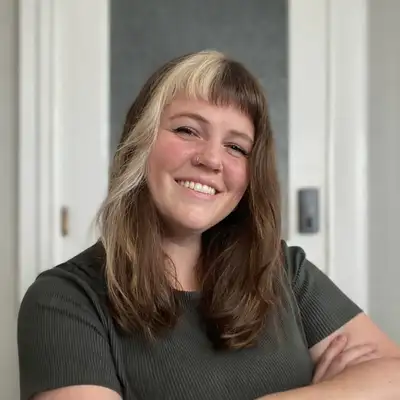
Welcome to the Biz Tech Superhero, the podcast that empowers you to unleash the technology superpowers within your business. I'm your host, Joshua McNary. I'm joined by today's superhero, Lexi Matthews, who is co owner of Uptown Coffee Co. Based in Marion, Iowa. In addition, she co owns the Upstairs, an event space plus serves as director of the annual cultural event the Marian Arts Festival. Lexi is a passionate local business person who cares about community, connection and culture. We'll be discussing how she uses technology in her coffee business and other ventures as well as being a small business person making things happen. Lexi, welcome to the show.
Lexi Matthews [00:00:45]:
Hi. Thank you for having me.
Joshua McNary [00:00:47]:
For folks just meeting you for the first time, could you share a little bit about who you are and what you do?
Lexi Matthews [00:00:53]:
Absolutely. So as you said, I own Uptown Coffee and Marion. I am the co owner of the Upstairs and I run the Marion Arts Festival. I have always been naturally interested in being an entrepreneur. My parents are entrepreneurs and I lived in Chicago prior to Covid but lost my job pretty quickly when the pandemic happened. Decided to move back with my now husband who I own the coffee shop with and we decided to take our shot at opening a coffee shop in my parents building. I'm very fortunate they had an event or they had a coffee shop in the front that didn't work out and so we decided to open. We always loved coffee and I worked in events and large scale operations for events and the music industry.
Lexi Matthews [00:01:39]:
My husband was a chef and we just loved coffee. Every time we went anywhere we decided to see the city by going to coffee shops and that's just how we got our start. He's very science brained. So when we opened we knew we wanted to do everything right and make all of our syrups in house, create as much of our food in house as possible and really build out our coffee program in a scientific way which is how you get great coffee. After a couple years I found myself being a little bit bored with the coffee shop. I love it but I just can't do one thing. So I decided to apply for the director role for the Marian Arts Festival. And then naturally my parents lived above, above the coffee shop and the bar that's housed in the back.
Lexi Matthews [00:02:20]:
And they decided to move out. When things started to kick back up and it got loud in the building, they realized how loud their home was upstairs. They moved out and that was a ballroom in the 1900s and that's now our event space, the Upstairs. So we turned that into an event space which Was a natural progression. I'm bouncing around a lot, but essentially I decided to tie these three things together and just be a multifaceted entrepreneur, which I think everybody is.
Joshua McNary [00:02:46]:
That's awesome. And it shows the progression of your journey. And we're talking just, what, a number of years here that you've been able to do these different things. So that's part of why I wanted you on the show, is because you're doing some interesting things and following your passions, which is awesome. So some of the people listening to this aren't from around here. We're both in the local metro area here across town, essentially different suburbs, essentially here in Iowa. But tell us a little bit about the area that you're in for those that are farther out, that aren't familiar with the local area, because there's a lot going on right. In your local community that are.
Joshua McNary [00:03:18]:
Is connected to what you're doing.
Lexi Matthews [00:03:21]:
Yeah. So we are right in the heart of uptown Marion. Uptown, if you're not familiar, is the downtown, essentially, of Marion. We're a suburb of Cedar Rapids. And uptown Marion over the past 10 to 15 years, has really been in a revitalization process. They redid the main street. They made everything with zero curb, so it's ada accessible. The sidewalks are very wide.
Lexi Matthews [00:03:45]:
It's really nice. They just finished the plaza, and they redid Marion square Park. If you ever get a chance to come to uptown, you just have to go and walk around. There's a bunch of beautiful main street shops. It's a main street district. They did an alley restoration project, which was one of the first things they did. They buried all the utilities and redid the overhead landscape of it. And then they put a bunch of art sculptures in the back alleyway where our building is situated and made it just.
Lexi Matthews [00:04:16]:
You wouldn't assume it's an alleyway. You think, oh, I don't want to go back there. But then you go back there, and there's like, a stage and there's a mural, and there's all these giant metal and different kinds of medium sculptures that are happening back there. And then after that, they redid the plaza and they did the park. And so it's really just been this, like, 10 to 15 year progression of revitalizing the whole space. I remember growing up and you would never go to uptown Marion. And now I live in uptown Marion. I'm always in the area.
Lexi Matthews [00:04:44]:
We're right in the heart. We say we're the living room of uptown. Yeah, it's just. It's beautiful. You have to check it out.
Joshua McNary [00:04:51]:
And just as we're recording this here in December 2025, they just opened up a skating rink like loop in that park and such. I haven't been over there yet, but being a hockey and skating person, I'm excited to see that at some point. There's a lot going on there. I think that's important to say for those that again, aren't familiar with where you're exactly located because it puts context to what you're doing. There's a lot of amazing things happening around you that you're able to then your coffee shop and your other endeavors are able to connect with and make go forward. So I think that's important to point out.
Lexi Matthews [00:05:21]:
Yeah, absolutely. I can't believe I forgot that ice loop. It's very cool. Right now we have a giant Christmas tree in the middle of it right in Uptown. So it looks like a Hallmark movie. There's beautiful lights everywhere. There's a giant LED Christmas present also in the park that you can walk through. It's like a beautiful photo opportunity and there's a big light up sleigh.
Lexi Matthews [00:05:42]:
So there's all sorts of stuff. And if you don't want to leave the house in the wintertime, I would go now while it's the holidays and go to Uptown because you could go ice skating, get hot chocolate, walk around. It's like you feel like you're in either a Hallmark movie or a snow globe.
Joshua McNary [00:05:57]:
If it's snowing or not, depending, go there. If you're in the local area, anywhere near here, go there and go to uptown coffee and get a coffee or hot cocoa or something and go out into the park. It's real close. So that is awesome. And it sounds like they're using some technology there in the fancy new Christmas area or holiday area there of the park. So I suppose we should talk about technology since we are the biz tech superhero and what how you're using technology. So in a recent conversation we were having, we were talking a little bit about just what you're doing, what you've tried in the coffee house. And then maybe you could tell us about that journey then to what kind of things you're using, some of the other business endeavors you have going on.
Lexi Matthews [00:06:34]:
Yeah, absolutely. What do you want to know?
Joshua McNary [00:06:37]:
Let's just start with kind of what is your technology stack around what you do run a coffee shop or run the event space. Just tell us a little about what that looks like for a service business like you.
Lexi Matthews [00:06:47]:
Yeah, so I'll start with the coffee shop. I handle pretty much all of our admin billing, payroll, book side of things. I would say my technology stack is primarily QuickBooks. We use Square for a point of sale and then we use a number of Square integrations like Square teams and Square payroll and Square time tracking for everything in the shop. And then I love, and maybe this is simple technology at this point, but I love Google Docs and Google Drive, Google Forms. I really rely on those a lot for training and sending out quizzes. We recently implemented a. What is the word? I'm looking for a form that's a maintenance ticket.
Lexi Matthews [00:07:30]:
So like a support ticket. We're about to open a second location and so we are going to need a system of people sending in their support tickets that isn't just talking up the side of my husband Rex's head being like, hey, this is broken or hey, this needs to be addressed. So that's probably my tech stack and maybe I'll think of a few more as we go along. In the event space, I'll say really quickly. My main technology is I use honeybook, which is a project management software and that has been a game changer for me because it's pretty much just me operating the event space and booking everything.
Joshua McNary [00:08:06]:
So QuickBooks is a key component for a lot of businesses out there, a lot of small businesses. I use QuickBooks in my stack of tools as a technology sounds like you're probably using that for obviously the accounts payable, the accounts receivable, the all handling all the receipts and all these things as well as payroll and other aspects like that as well.
Lexi Matthews [00:08:27]:
Yeah, we don't, we use Square for payroll, but QuickBooks, I do just all of our books. I work with an accountant once a quarter, but I do all of our day to day expenses and then look at our cash flow statement, look at our profit and loss, look at our balance sheet, those kinds of things. Just see where we're at and keep an eye on things. And that's helpful just because I'm not the only one spending money in the business and a lot of money is just coming in and out every day regardless. So keeping an eye on where our expenses are sitting.
Joshua McNary [00:08:57]:
A business to consumer type organization like you are in $3, $4 coffees coming in and out. There are a lot of transactions coming through and that's mostly going through Square. I imagine that's where all those transactions are happening and that kind of gets dumped into QuickBooks in some way. Is that accurate?
Lexi Matthews [00:09:13]:
Yeah. So the way it works is and we work with DoorDash as well. So we sell. We do with DoorDash. So the way it works is square is where all of our transactions come in and we send all of our invoices through Square as well. So if we do a catering order, it goes through square. DoorDash integrates with our square point of sale. And so all of the DoorDash transactions actually go through Square as well.
Lexi Matthews [00:09:36]:
The money doesn't go through square, but the transactions do. And then we get a payout weekly from DoorDash and then everything dumps in pretty much daily into QuickBooks as a big automatic like dump. And then over time you put in all of the different items so that it recognizes what they are. And then every couple of days you go into your app transactions and QuickBooks and you just look at what those expenses are or what those items coming in are. And if it doesn't recognize any, you put in information so that it registers what it is. And then it just puts it processes as one big sales report essentially each day. And then I match it to my transactions.
Joshua McNary [00:10:15]:
Okay, so I'm curious then how or do you desire to understand what's making up that big block that's being dropped in there? You might be in a poll from Square. Okay, we sold this many Americanos, this many lattes, this and whatnot. And then there's like the flip side of that is beyond just what's selling well is okay, do we have production inventory and these kind of things? So I'm curious operationally, how do we handle that? Do we use technology to help us with that?
Lexi Matthews [00:10:40]:
Invent. Are you speaking specifically about inventory?
Joshua McNary [00:10:44]:
I guess I'm asking about kind of what is working from a sales perspective. Like what are people ordering, but that has have some relationship on inventory. So I guess I'm asking about both. Maybe you take one at a time.
Lexi Matthews [00:10:54]:
Yeah, no, and that actually was very helpful. I. I don't really use QuickBooks for inventory. I will. It dumps the different transactions into some buckets. We've got like coffee sales, we have merchandise sales, we have food sales, we have donut sales, we have catering sales. I think those are the different sections that it all funnels into. So I look at those on a basic level on QuickBooks, but I really use square for in our back end to look at what we're selling.
Lexi Matthews [00:11:23]:
Like how many hundreds of lattes are we selling? Are we selling more 20 ounce ice lattes than 16 ounce ice lattes? What's more popular? Do we keep a seasonal on long term? Has it been so gangbusters that we want it to become like a classic menu item now. But yeah, we really look at square for the inventory management. I will say it's not super robust, at least from what I've experienced, that you want to rely on it for your ordering. Like we do a manual inventory every week. Every Tuesday our manager does an inventory because you just, you can't fully rely on the automatic inventory and everything. Like you put in a number of portions of things, but it doesn't, it just. I don't know, I haven't figured that out yet. Not sure if that's an avenue worth exploring.
Joshua McNary [00:12:16]:
That's okay. I'm just curious because I don't work in your world, right? I'm. I work with businesses. And so as a service provider, my inventory is my time, my brain, my, my people's abilities to get things done. So when we're talking about a higher volume business like yours and then trying to figure out how to make this work or not work because maybe you don't need to or want to. That's where I was going with that question. It sounds like you have a system that works for you at this point, maybe with opportunities going forward, especially as you consider other locations or other be able to more efficiently manage those opportunities if technology can actually do it. And that may be hard when you're dealing with physical goods as well and a high volume of physical goods.
Lexi Matthews [00:12:58]:
And I think a couple things. One, our manager's a wizard with spreadsheets. So he's really great at. He created a cost of goods spreadsheet where he puts in everything he orders and it tallies up how much he's spending so he can stay within his cost of goods budget each week. And then it also helps him do his inventory week to week because he is looking at that. But we've just found that we say trust but verify a lot. So like you can trust your inventory from of what you ordered last week on your spreadsheet, but you need to verify what we have in house because you never know. There's so many people.
Lexi Matthews [00:13:31]:
We have 14 people that work in the coffee shop and somebody baking might use all the sugar during the week. And then our prep cook comes in and he needs 25 pounds of sugar to make syrup. And you don't realize that in a blink of an eye you've used all your sugar. So it's really like trust but verify. Look at your spreadsheet. Okay, this is what I think I'm at. And then I'm gonna go in and put my hands on where I'm actually at. So that's been very helpful and.
Lexi Matthews [00:13:59]:
Or is helpful for us. And then I lost my train of thought on where you were going with that.
Joshua McNary [00:14:05]:
What you said prior, I was just talking about the fact you want to use technology for these things. I think that was the other angle I was coming at. Sometimes it doesn't always make sense to. To do a technology thing for some of these cases.
Lexi Matthews [00:14:18]:
Okay, so yes, now I remember we are opening a second location and I do think it's going to become crucial that we have some digital version of inventory that we can rely on, because there is going to be a lot of crossover. And I don't think one of the advantages of having a second location is that you can double up on goods and hopefully get them at a cheaper price. But if you're doing everything individually in its own silo, then you can't take advantage of that. So finding out how we can use our digital inventory, if we can build something that's reliable enough to use between the two locations, I do think will be crucial. I feel like our manager will probably be able to help us find a solution for that. And we've talked about using forms and things for somebody to do inventory and then it like aggregates all the data and kind of tells you where you're at. But that is going to take. I think setting up the system properly is going to take a good amount of time and energy so that we can utilize it.
Lexi Matthews [00:15:16]:
We're just not quite there yet.
Joshua McNary [00:15:19]:
You're maturing in what you're doing and that's awesome. And it sounds like you're already breaking up the right tree here. Earlier you made the comment when you introduced your stack about Google Sheets or Google Docs and like bemoan them a little bit. Oh, is that really good technology or from a standpoint, it's not necessarily the whiz bang technology that you think of when we're thinking about technology solutions, but that is often the place we start. And you already have started. You mentioned your team's already using these spreadsheets and in a wizard way to allow you to manage your current location. So you're going to start there and use that further and extend that to the newer locations. And that is going to be the basis to allow you to experiment and figure out your process.
Joshua McNary [00:16:02]:
And then that process will eventually either be mature within that environment or maybe someday you realize we can create a similar process over in QuickBooks or Square or whatever that'll be more efficient or somehow tie it together so you're already heading down the right direction. You're just figuring it out still, you're figuring out the process.
Lexi Matthews [00:16:18]:
Yeah, and I love adjusting a process. That's something that I just for whatever reason, every so many months I look at something and I'm like, okay, let's break this down and see what's working and what isn't working and how can we adjust it. And then it's, I don't know, something about it just really, it's is very nerdy, exciting to me. So I have a feeling we'll be updating some of our processes in the new year.
Joshua McNary [00:16:45]:
Well, that ability to be an implementer within organizations is a key. You have to have somebody in your organization as an entrepreneur, either the entrepreneur or like you, someone in the mix that's thinking about these things and then have the good people to help you make it, make that even better as you do. So that's awesome. I think the process and building the process and then letting that play into the tools is the key message there that we're talking about as we're exploring where you're currently sitting here. So that's awesome. Okay, I want to ask about another kind of angle on this that's technology oriented and has been a love hate relationship, at least with some people I've talked about over the last few years. But you mentioned DoorDash earlier and this idea of the ability to make these deliveries to anywhere. And back in the pandemic, of course this became very important and really helped a lot of businesses out to keep them going.
Joshua McNary [00:17:34]:
And now I know there's kind of certain businesses that really encourage using these technologies or these tools, these sites, these services, others that, you know, maybe don't treat the small businesses great. I don't want to put you in a tough bind here in public with any commentary you don't want to make. But you, it sounds like you have a good relationship with DoorDash or you like working with DoorDash. But I'm just curious, like from your perspective as a small business person, any thoughts on that kind of world and where you see Miami going with regards to these online delivery platforms and how they work for your business?
Lexi Matthews [00:18:08]:
Yeah, I do feel like the jury is still out on DoorDash. It's a blessing and a curse. We are very fortunate that it does help us generate an additional. It could be anywhere from $400, which is not great, to over a thousand every week and additional sales. And that's not nothing I a you don't have great profit margins. You're for a coffee shop especially. And so every dollar counts. But when you look at the dollars that you're bringing in, you really have to understand how much is just going straight back out the door with that program.
Lexi Matthews [00:18:40]:
And then. And so we do mark up everything that goes out on DoorDash. And then we also, for a long time, certain things we didn't sell on doordash, like, we didn't sell hot lattes forever, because there's a quality standard that we didn't feel like we could hit by doing hot lattes on DoorDash. But then you get a ton of people who reach out and they want. They want a latte, they want to be able to order it for delivery. And so at a certain point, we said, if people want it, they just have to understand that they're just. You're not getting the same product that you would be getting in the store. And so we did compromise one of our values there, which we don't love.
Lexi Matthews [00:19:13]:
But it also feels like if we're already doing this thing, we might as well offer it and just know, give that, like, disclaimer to people. But I will say it also allows us to reach a whole new audience of people that are. They're stuck at their desk or they can't. They don't have a car, or they just. They need doordash to be able to get what they. Food and drink. And it even goes to. They can shop at, like, Walgreens and stuff now.
Lexi Matthews [00:19:39]:
It's a good service, ultimately used sparingly for the public. And then I think on our end, like, it does bring in additional cash flow. So it's. Yeah, mixed feelings, but I understand its purpose, and I think we've gotten a lot of exposure from it. But I will go back and say one thing. DoorDash will hound you for additional sales and promotion and marketing. They call the coffee shop daily, and everybody at the coffee shop knows if they call asking for a manager, an owner, you just. You say, oh, they're busy right now.
Lexi Matthews [00:20:12]:
They can't talk because they're always calling you, trying to increase your promotional spend. And so you. You have this net payout every week. I look at it every week that I do my expenses, and it's one week. It was like a hundred dollars for advertising and promotion. And I was like, what am I even advertising? I don't know. It's hard to sometimes understand where your money is going and justifying it, especially when you're looking at those small Potatoes every week. But yes, good and bad.
Lexi Matthews [00:20:43]:
I think it's a necessary evil.
Joshua McNary [00:20:45]:
This is an area where technology meets reality. There's a technology solution here that makes it easier for people to order to find you. It's a directory in a sense as well. And then there's of course the backend platform that allows the drivers to come and get the stuff and confirm they got it from you and confirm they delivered it and all the things. And that's all amazing as technology that we didn't have years ago. But there's these trade offs and the reality of the business models and so that's where we're getting to like small business conversation here rather than just strict technology. But that's why I want to ask you because you know how it actually is on the ground and from my experience not only with the food delivery services or the delivery services in general, but previous iterations of this, whether it be the search engine optimization companies or the pay per cook advertising on Google of years past and still is but or other ways that small businesses have been sold a bill of goods around some kind of technology to help them. But the reality is if it's not used prudently like it sounds like you are in this case, it could become an albatross for a small business.
Joshua McNary [00:21:52]:
And so I'm happy to hear you're using it and find it positive. But you're also been pushing it back when you need to, which is good.
Lexi Matthews [00:21:58]:
Yeah. And I think it's. I think back to some of my first jobs. I worked at Ziojano's and they had a delivery driver and they did a lot of delivery and I think it's. People expect it now from a DoorDash or GrubHub or some sort of food delivery service perspective or even Uber Eats. It makes sense to me and want. There's a joke. We have a.
Lexi Matthews [00:22:18]:
Our coffee shop, our house espresso is called not yout Granny's Coffee Shop because the joke is that we really are your Granny's coffee shop. We're everyone's coffee shop. But like the coffee clash and like coffee culture in town is it. It's a. There's a bunch of ladies that come in every Tuesday and get coffee. Anyway, I digress. We don't want to just be like just a coffee shop that you only find if you stumble upon it. We want to be relevant and involved and on social media and on doordash and people to be able to find us without just coming uptown.
Lexi Matthews [00:22:51]:
Marion. So I do think it's it is important and it is vital to us. So I don't want, I don't want to hate on it too much because I think it is great and very useful.
Joshua McNary [00:23:01]:
That's great. Yeah, appreciate those comments and helpful for those out there that like me that maybe want to come to coffee shops like yours to understand how that all works and maybe make a decision as to how to order, how to get it in the right context. So thank you for that. I want to ask about the event space and what you're doing there. You mentioned with regards to I guess catering earlier that not necessarily event space but you mentioned catering is kind of part of your how you invoice or how you do things in your existing payment models. But you mentioned another tool earlier with regards to like project management of the event space. So can you talk a little bit about that and maybe why you chose that after learning what you have through the coffee shop?
Lexi Matthews [00:23:44]:
Yeah. So the software management I use is called HoneyBook. It's a project software management and I've gone through a couple different options. So I started with Streak, which is a project management software I used. What was it called? Sorted was a Gmail integration. And then I landed on honeybook after I can't remember, I think I talked to some people in our Goldman Sachs small business program and they had mentioned it for project management. And really it's a game changer for me because I do 95% of our booking upstairs and like everything from start to finish we are just an event space. I'm not an event planner for people.
Lexi Matthews [00:24:27]:
But it's really a fine line. So the process people reach out online. We're pretty much word of mouth marketing at this point in time. And it sends me an inquiry through honeybook, an email and then I sign it to my pipeline. I bring it in and I do an it's an intro. I send our information over pricing letting them know if the date's available. Then I move it to my next pipeline stage and it says I've like follow up. Do you want to follow up after a couple days if I don't hear back or I go into info gathering.
Lexi Matthews [00:24:58]:
So I start chatting with them, maybe book a tour, maybe talk on the phone. Maybe they book it sight unseen. And from there I send a contract with information. HoneyBook is great because you can create templates for everything. So I create a template so general agreement and then an invoice and then that goes out to them. They pay their initial deposit and then it pops back up the week before the event they pay their final payment. It really has helped me be. I feel like four people instead of one person.
Lexi Matthews [00:25:30]:
And it just, it has a calendar integration, it's got reminders for everything. You can set up automations. It really is a catch all and you can. What I really like about project management software is once you understand it, you can really mold it to what you need it to be so you can create automations that work for you. You can have all your email templates so you know what your frequently asked questions are. I have an email template that has all of our usually requested like catering or do you have photos of the space? So I just have links to my Google Drive that has photos, those kinds of things. So it's really just allowed me to streamline my workflow so I don't spend hours and hours coordinating these parties. It's done in a matter of minutes.
Joshua McNary [00:26:14]:
So it's. You're using this technology to help you run the process of. In this case it sounds like the sales and project management aspects of your event space. So did that what came first? Do you think that the tool helped you create the process or was the process there already or what? How do you see that playing out? Cause I've seen it happen both directions with my clients.
Lexi Matthews [00:26:35]:
Like I said earlier, I always, I love a process so I'm always looking at things and I tend to over commit. I'm a classic over committer. So in my mind it was like I have this process but it's very cumbersome and it's very failure oriented because if I don't follow a step then I'm setting myself up for failure, it's not happening. And it was very reliant upon me. So I had a process cumbersome and I said there has to be technology for this, there has to be something that I can integrate. And so that was where Streakk came in, my first project management. But then it was built for bigger companies that had many employees and it just, they took away pretty much all of the control of the or all of the functions of the free or the lightly paid option that was like a, you're a solopreneur, you're using it for yourself. And so it just wasn't affordable for me.
Lexi Matthews [00:27:27]:
And I tried like a Gmail integration sorted and that just didn't have enough functionality for me. And I could tell if I started as I started booking more and more events something was going to fall through because it was still very self reliant. So when I landed on Honeybook it really had the functionality in there and I was able to look at my process and then learn how the software works and then bring them together. So I had my process, but the technology allowed me to sit there and like kind of mess around with it and learn it and then be like, okay, so this would work. That doesn't traditionally work how I was doing it, but if I did it this way, it would work better. Like think through everything, start to finish, and then build it out. I don't think that. I don't think it was necessarily one or the other.
Lexi Matthews [00:28:17]:
I think it was a little bit of column A, column B. I am a creative at the end of the day, so sometimes it gets a little wild in the middle while I'm learning things.
Joshua McNary [00:28:26]:
On the fact that you had the opportunity to go through a couple different tools for. Because you had to based on the circumstances. You actually were working on the process during that. And then you found the tool that matched that process. And I find that over time, the tools that best fit any organization, small, big, medium, whatever, if the tool vies with the process that's either latent in that organization or maybe well defined within that organization, then it's wow, this tool's amazing. And everything comes together. But you could go down the street to the other coffee shop, in this case the event space, go down the street to them. And this process may not work as well for them because they don't have the same process or they do things a little bit differently.
Joshua McNary [00:29:07]:
So if for you, you found. It sounds like you found the right one at the right time through your journey, and that's also built on all the experience you have with a coffee shop and other things that you've done. Yeah, that's. That sounds like it was a great fit for you at the time. And something will be for some time too, because you got some way you can grow with it as well.
Lexi Matthews [00:29:24]:
Yeah, and it's really worked out in the sense that we have started booking a lot more parties and it's just now I have my system in place and it just boom. It just goes the way it needs to. And it also. I co own the space of my mom, so she needs to know when all the parties are. But it's. It automatically she's part of the management software, so it just adds to her calendar as well. So those integrations are. Instead of sending a calendar invite every time I have a party, it's already in her calendar and just sends it automatically.
Lexi Matthews [00:29:53]:
And it's wild to think, what did we do Prior to these kinds of automations, there's so much admin happening and I wouldn't be able to do all that I do without these integrations that are just seamlessly happening day to day.
Joshua McNary [00:30:08]:
I know, like getting more crazy, more integrated, more smart AI along the way, I think back to early in my career, the early 2000s, the forms we would literally have on file files that we would use. And we, we thought maybe digitizing part of that into a spreadsheet was pretty awesome back then. That's dating myself a bit. But it's, it is pretty amazing how we, and we naturally feel like these tools are just part of our day to day work. And every time we get a new update every year on a new operating system or find the next tool like you did, it's wow, how do I live without this?
Lexi Matthews [00:30:42]:
Yeah. And something I've noticed too is as it gets more robust and you do get old, I my iPhone just updated and I find myself being like, why did they change this? Or why is it like this? And I said I need to go on YouTube and look up a video and just what are the ins and outs and the tips and the tricks? Because you do start to take it for granted and you just think you're going to passively get it and you do for the most part. But there's all these hidden functions that you should take it upon yourself to learn how to use and start using them because they did it for a reason. It's not just for fun.
Joshua McNary [00:31:16]:
So, yeah, maximizing the tools that are in front of you. I recently purchased a new MacBook to add to my repertoire and I'm using that as an opportunity to learn about the new operating system. Right. Because I'm basically setting that up as a new machine. Even though I've been using these machines for many years and have multiples of them, the idea of being able, even for a technologist to be able to stay up on top of that, you're doing the right thing and trying to grow towards where the technology is going, not just rest on what we know. So that's a wise thing to do. Okay, we're wrapping up on time now, so I want to go ahead and ask the final question we ask Everybody here on BizTech Superhero and that is what is one actionable tip that you would give businesses looking to better leverage technology.
Lexi Matthews [00:31:58]:
So I think speaking to what we were just talking about, it's don't be afraid to learn the new things that are coming out. Don't take it for granted. Really look at what you're doing and how things are updating and try to learn them. And part of that too is creating for us in the coffee shop, creating our standards of practice so that when we're doing something digitally, we're repeating it every time. So we've got templates for everything from training to recipes. That way you're not reinventing the wheel all the time and you're really utilizing your technology efficiently. That's what it's meant to be is efficient. And so if you're reinventing the wheel every time you're using a piece of technology or a form, for example, then it's just you're using all that brain energy.
Lexi Matthews [00:32:41]:
So use set up your system and use it and then repeat.
Joshua McNary [00:32:45]:
Great advice. And it's the basis of how you could use technology wisely, strategically, with the outcome in mind, which is something I talk a lot about in these shows and elsewhere. So I appreciate that approach. And the fact that you are leveraging technology inside of a small business coffee shop and making it work and continue to look to grow is proof that you are a biztech superhero. So I'm really happy we've had you on the show today and this has been great. Where can people learn more about you online?
Lexi Matthews [00:33:17]:
Yeah, Coffee shop is Uptown Coffee company. You can find us. We're pretty active on Instagram. It's Uptown coffee co is our Instagram handle that is also our website. MarianArts Festival is marianartsfestival.com it's every spring, every May, usually the third Saturday in May. And then the upstairs is the upstairs memorialhall on Instagram and that's the best way to find them stairs.
Joshua McNary [00:33:42]:
Great. Thanks for joining me today.
Lexi Matthews [00:33:44]:
Thanks for having me.
Joshua McNary [00:33:46]:
All right, folks, that's it for today. Be sure to subscribe to this podcast on any of the popular directories. Tell a friend about what you have learned here on biztech superhero and subscribe to my e newsletter@mcnarymarketing.com subscribe. Thanks for listening. I'm Joshua McNary and I hope you will join me again next time so you can learn how to become a biz tech superhero. Bye now.